
Email the editor
| Table of Contents Email the editor |
Table of ContentsEditor's Notes Articles/Information
Reference Desk
Tool Box
Database/Book Services News & Announcements
The views expressed by writers for The Standard do not necessarily reflect the views of The IOBA. |
Michael Watson, editor
You read that right, folks. I've been too busy to think up some witty nonsense for a title, so I'm putting the burden on you. Go ahead and think up a good one. Got it? Just imagine it up at the top of the screen right now. Please note that those of you who thought of "Editor Too Lazy to Think of a Title" will have to try again: I'm not using that one.
What have I been busy editing? A comprehensive list and detailed comparison of book listing sites, an extensive article on genealogical ephemera, bookselling lessons learned by the founder of Alibris, interviews with developers of bookselling software and an online bookselling site, and a write-up on the only print magazine devoted to fine books. When you add two bookseller biographies, a book care article, our informative Q&A, and an article on why our President belongs to the IOBA, the total is an informative issue that benefits our members and friends.
Our redesigned http://www.iobabooks.com is now online in its new incarnation and IOBA members may list their books online at what is possibly the lowest rate charged in the trade. Considering that there is no commission on sales, it's a tangible benefit that is available only to members of the Independent Online Booksellers Association. We're fine-tuning and fixing the site as we go, but pleased with our progress and sales. More information will be in the next issue, so watch for it.
We mourn one of our own, as Martha Kelly lost her fight with serious illness. Martha was a long-time IOBA member, author of three wonderful articles on womens' sufferage (1, 2, 3), and owner of Gutenberg Books in Rochester NY, USA.
IOBA members and friends are encouraged to donate directly to the American Red Cross to support relief for the victims of the Hurricane Katrina disaster. Other charitable institutions supporting this cause may be found at Charity Navigator
A note from Ken Lopez, President Emeritus of the Antiquarian Booksellers Association of America (ABAA): The Antiquarian Booksellers' Benevolent Fund is a nonprofit charitable organization established to help booksellers who have faced catastrophic circumstances whether as a result of natural disaster, sickness or some other unforeseen and uncontrollable series of events. We are appealing for information about booksellers who have been affected by Hurricane Katrina, and are also appealing for funds to support those booksellers. The ABBF was established and is administered by the Antiquarian Booksellers' Association of America (ABAA) but the funds are available to all booksellers, whether ABAA members or not. In recent years, the majority of grants given out by the ABBF have gone to non-ABAA booksellers. Most recipients of grants from the Benevolent Fund do not even know of the fund's existence, and have not applied for grants; in general, the ABBF is informed of their circumstances by their colleagues, and is able to provide modest grants, no strings attached, in a time of great hardship. Donations to the fund may be made by check, payable to "Antiquarian Booksellers Benevolent Fund" and addressed to:
Antiquarian Booksellers Benevolent Fund
c/o Antiquarian Booksellers Association of America
20 West 44th St.
New York, NY 10036-6604
You may also call the Headquarters of the ABAA at 212-944-8291 or email at hq@abaa.org to contribute via credit card.
As always, if you find this issue of the Standard useful, tell another bookseller: they might benefit. If you feel something is missing from this issue, suggest it for the next issue: an e-mail to editor@ioba.org will get things started. If you want to promote the stability of our trade through higher bookselling standards, then visit us at http://www.ioba.org or join us today at http://www.ioba.org/app.html
Best regards. -Michael Watson, Editor, editor@ioba.org
Richard Weatherford, Founder, Alibris
Like most people in the used and rare book business today, I was not trained for this career. I did not have access to the generations of knowledge and experience enjoyed by the children and grandchildren of the founders of Dawson's Book Shop in Los Angeles, the Arthur H. Clark Company now in Spokane, Washington, and The Argosy Book Shop in New York City. I had to learn this business by listening to mentors, watching how other booksellers worked, and by making mistakes more experienced people would never have made.
Sure - I was a reader. My father took me to bookstores in Seattle to look at used books and I grew up just down the street from Elizabeth Rider Montgomery, one of the authors of the Dick and Jane stories, who encouraged me to read. But none of that taught me to be a bookseller any more than looking at pictures of a lake taught me to swim. I had to jump into bookselling in order to learn its lessons, and since most of those lessons involved my making or losing money, I tended to learn and remember them pretty well.
My first book sale list, issued 33 years ago, had 10 items in it. Nine of these were rather common, inexpensive books, and the other item was an 8 volume leather bound set in nice condition of some famous writer whose name I have now forgotten. The cheap books were priced in the $2 to $5 range, and none of them sold. The leather bound set was priced at the outrageous sum of $100, and it sold right away. The lesson here was obvious: cheap books are so easy to find that there was no compelling need for my little group of customers to buy any of those. They could find them anywhere and buy them anytime. The leather set was unusual, though, and priced at $100 was obviously scarce and desirable. People were looking for them, but they were not looking for the cheaper books because they did not have to.
My next lesson came from the variety of catalogs I began receiving from other booksellers. Since I was teaching English, I naturally assumed I was going to specialize in literature. But Ohio has a long history and I began to find it easier to purchase scarce books, maps, and ephemera on Ohio and Midwest history, Native Americans, and the Civil War. In the first few years I was fortunate to have met and learned from some of the great Midwestern booksellers including Robert Younger of Morningside Books in Dayton, Ohio, the legendary book scout Arthur H. Phillips who lived in Columbus, the bookseller and writer Jack Matthews, whose books remain among my favorites for stories about booking in the Midwest, and some of the most knowledgeable collectors in the state, including Joe Dush of Willard, Ohio, and Bill Barth of Youngstown. Without exception, these and other booksellers and collectors freely shared their wisdom and experience.
Among the important lessons I learned from them was that the book business is as much about the customer as it is about the books. Books, they said, are out there, available in quantity, yours to find and buy, including the rare ones. But customers are hard to find and difficult to keep. They must always be treated with respect and the bookseller must always deal with them honestly - anything less than that will result in the loss of the customer. Since the collecting and bookselling community, especially for scarcer material, is relatively small, dishonest dealing will always garner attention. Fortunately my father had also taught me that lesson early on, so I had no problem guaranteeing everything I sold. Sometimes the guarantee was hard to support, as in the case of an expensive book I sold to a customer that had a finely crafted facsimile leaf I had not detected. I cheerfully refunded the $10,000 purchase price, plus shipping costs both to and from the customer, and I think now that it was one of the best experiences I ever had because that customer told everyone how honest and pleasant I was in the face of this disappointment.
It is clear, now, that just about anyone can become a bookseller. The bar to entering the trade is very low. Penny sellers abound and there are all too many who do not know the terms, customs, and techniques of bookselling. Fortunately most of the sellers who are new to the trade focus on selling more popular, less-expensive books. Gathering the information necessary to be able to acquire and sell antiquarian and more valuable modern books is still difficult, though. I learned that when, in the dawn of the personal computer age, Jake Chernofsky called to ask me to write a column for AB Bookman's Weekly and to attend the Antiquarian Book Seminar in Colorado (http://www.bookseminars.com/) to give a talk on what computers could do to take over some tedious jobs booksellers had to do, like keeping mailing lists up to date and printing catalogs and lists of books.
My first day at the Colorado Seminar was interesting. There was some hostility to using computers in a trade that believed in old ways of doing things, but Jake had warned me that might happen so I prepared myself for the worst. Jake invited me to stay for the full seminar as part of the faculty and that week changed my bookselling career forever. Much of the information given at the seminar was, I now realize, crucial to my advancing from a mere bookseller to a knowledgeable antiquarian bookseller.
There I became comfortable with a wide range of reference sources. I was able to associate with some of the best and most respected booksellers in the trade, both as friends and as mentors to whom I could turn for help, if needed. I was able to spend a week immersed in every aspect of the trade, from information sources, to cataloging, to book repair and restoration, to running a store. The faculty was open and available to help at all times and I realized after the end of the seminar that I could not possibly have had access to all that information and those contacts without the seminar. The information made it possible for me to move, with confidence, from selling cheap books to trading in scarcer, more interesting, and more valuable books, maps, documents, photographs, and ephemera.
Fortunately, I was able to return as lecturer and faculty member several more times and I always considered myself both a teacher and a student, always learning, always open to new ideas. Those were some of the best days of my professional career and the seminar made it possible for me to make a nice living outside of teaching.
But can that still be done? Is learning the antiquarian book business still relevant to a trade that appears to be focused on penny books and fast turnover? I believe strongly that it is. There are still many collectors looking for good and great books. They need and want the assistance of knowledgeable booksellers. The fact is that for more common books the customers set the prices. If someone wants a copy, but doesn't want to pay much for it, there is always another copy somewhere else that is priced attractively. That is not as true with the antiquarian book business.
As we say, "rare books are getting scarcer and scarcer." When demand is greater than supply, the seller sets the price and usually gets it. That is why selling scarce books is so attractive. People can spend a great deal of time buying, cataloging, shipping, and accounting for cheap books, all for very little profit. Scarce books demand more research, careful cataloging, and secure packaging for shipping, yet frequently are quite profitable because the seller who handles them has a customer who wants or needs a copy and is willing to pay for it because she or he can not find it anyplace else.
What the Internet has done is to expose, in an even more obvious way, what has been true for the past few decades: up to a point, customers set prices on books. If you have books that are relatively common, price them to sell. The Alibris Pricing Service was created to help sellers re-price and move this inventory. If you don't re-price you will probably see prices continue to fall and your copy will remain stale, perhaps taking up room and funds you could use for better inventory.
If you want to work with scarcer, more valuable books, learn all you can about the trade. Develop your sense of what is valuable, but be open to learning some of the same hard, sometimes-expensive lessons I have had to learn over the past 33 years.
Richard Weatherford is Founder of Alibris, an online bookselling venue at http://www.alibris.com
Alan Culpin
I went into the book business after having taught at a local college for a number of years and having seen that the future looked bleak. Faculty were being cut and I knew there was no possibility of another job in my field: Colorado and Western History. What else could I do? I loved books. I had been collecting modestly in my field, and had several hundred books on Colorado and the West, so I started what I called The Western Americana Bookshop. For the first few years I ran the business on the side and still taught, which meant I did not have to take money out of the business - just as well! I knew little of the book business but learned as I went along. There were no book schools like the annual event in Colorado Springs, at that time, so it was pretty much 'learn as you go.' Twenty-eight years later I still learn and I still love it. It sure beats 'working for a living'! And, like the guy who won the lottery, I will hold on until the money runs out.
I started Abracadabra Bookshop in 1977 and the first location was in the Nepenthes Cafe on Market Street in Denver. After buying out Stage House II in Boulder, we moved to new quarters on Court Place, above the bowling alley. Dealing with the owners, Hare Krishna, was not pleasant, so we purchased a Victorian house on West 32nd Avenue and moved our growing stock into the Carriage House in 1980. We stayed there very happily until 1994, when, bursting at the seams with over 50,000 volumes, we moved to 32 South Broadway. This was a learning experience for us. Despite being the busiest street in Denver, Broadway did not increase our sales. It did, however, increase the amount of theft!
Frustrated by theft and other problems such as lack of growth - we did a study which showed that only 2 percent of the population of Colorado were book buyers - we decided in 1998 to move to Texas. We located in the pleasant Gulf Coast town of Rockport, known for great fishing, year-round sailing, and good seafood. We knew that a small town of 15,000 would not have the over-the-counter sales of Denver, but hoped the growing Internet would help. We were quickly surprised at how good over the counter sales were! We were soon doing 1/3 of our Denver sales. Texans are readers and the other Texas dealers were friendly and helpful. Good people.
However, there was a dark side to the Texas experience. Texas taxes are very high. A latent law allowing used books to be taxed as inventory was activated in 2003 and this meant we had to leave Texas. The Tax was 2.6% of the value of your inventory, and the law allowed taxing authorities to check your income tax records to see what you claimed. An idea of how devastating this can be seen in one item - a set of Octavo Audubons valued at $40,000 would produce $1000 a year in tax! We had to leave. I was getting very good at packing up and moving books. When we moved from Court Place to West 32nd, with 30,000 books, it took a week, shelf to shelf. West 32nd to Broadway, with 50,000, was accomplished in 10 days. Denver to Rockport, with 80,000 books took 10 days to pack, a week to ship in two tractor trailers, and 3 days to get back on the shelf. Rockport to Denver, with approaching 100,000 books, took 5 hours to pack, 5 days to ship, 2 days to re-shelve, and the rest of our lives to alphabetize! If anyone needs guidance in this area, please feel free to call.
So, back to Denver in 2004 and a new location at 7030 East 46th Avenue Drive. Colorado Taxes are among the cheapest in the nation, thanks to a man named Bruce. It is a good place to be in the book business and, with the Internet, location is not nearly as important as it used to be. We are able to buy well here, although Rockport produced some amazing finds, such as the 1st Edition of William Morris's Well at the World's End in Very Good condition!
We provide a complete book service, with close to 100,000 volumes in stock, a free book search, and our books are listed on the 'Net with several services. We do several book fairs every year, mostly in Texas. This brief account of our history would not be complete without mentioning my wife, Marcy, whose contributions after leaving the National Park Service have been marvelous, and over the years such great employees as Diane Kennedy, Joan Riddel, Russ Wiese, Jon Snurka, Caren Eno, Jack Plante, Katie Mclean, Melody Field, Melinda, Dan Gorski. and others. As always, we are always interested in purchasing good book collections.
Alan Culpin is the owner of Abracadabra Bookshop & Booksearch in Denver CO and can be contacted at (303) 733-5700, orders@abrabks.com", or http://www.abrabks.com
David Friedman
In the quiet darkness of a late fall night, circa 1923, my grandfather Charlie and his family packed their belongings and quietly left Birmingham, England. Times were not good in Birmingham for union organizers and efforts to bring a reasonable standard of living to the bakers there came at a very high price.
Charlie and family moved to Glasgow, Scotland. The small used bookshop that he started there was stacked to ceiling with dusty shelves which held a mixture of magazines, books, old toasters, and soft-core British pornography. The bookshop was eventually taken over by my aunt and I visited there a few years before she died.
Perhaps my own relationship with books and selling them was genetic. Coincidentally, I also spent several years as the chief negotiator for a teachers' union. Times had changed and, happily, I didn't feel the need to flee Fort Dodge, Iowa - at least not because of my union organizing activities.
The IOBA booksellers are gently tied to one another, even though much of what we do is rather solitary. Our days may be spent hunting for books, keying in data, and dealing with sales orders. The 'Independent' aspect of our work is significant. Paradoxically, we are united in our sense of personal freedom and charting our own course. When we buy a book (or a thousand) we rely on our personal intuition and knowledge to determine if we'll be able to convert that book into a profit. Much of our day-to-day survival rests on our own shoulders.
But not entirely.
Being part of an association of like-minded people provides a sense that we're not in it alone. While there may be 15,000 independent online sellers, it's comforting to know some of them e-personally. It's also significant that those who choose to join together share a commitment to quality, service, and a code of ethics. As a group we independent people make a statement of our commitment to a standard of excellence.
It's a good business decision to let others know that you stand for something. Our customers are people who are interested in knowledge and education. It pays us to be knowledgeable and educated about what we are doing. There is no better way to accomplish this than by joining together.
There's a fair amount to know about the art and science of our business, especially since little more than a decade ago our business model didn't even exist! Through association with others in the field we each have the benefit of shared experience, such as learning about the cutting-edge information that can have a positive impact on our business. Frankly, why keep reinventing the computer chip, or the wheel, when others can provide you with some of the basics?
My involvement with IOBA has enhanced my work. It's been an association that has given me a great deal--and offers the potential for much more. IOBA is a unique organization that is dedicated to serving our shared interests. It helps each of us be a little bigger and have the potential to be a little more independent than we were without it.
My membership in IOBA has been of substantial value to me. We face increasing challenges in our business on a day-to-day basis. The explosion of the digitized world continues to provide tremendous opportunities as well as significant challenges. One of the challenges affected many of us when a few months ago a major on-line service had a significant glitch and interruption of service. Potential changes in postal regulations could impact the shipping of our books we sell. Together, we can learn how to deal with any adverse effects on our business, and have some potential to impact issues as they emerge.
As we know, right now anyone with a book can be a bookseller. For better or worse, it's what allowed most of us the opportunity to become a part of this field. Is there more to what we do than the very simple act of offering our goods in the market? I believe that without our willingness to 'associate' with one another in our common best interests, we will merely be reactive to the market place. Our potential strength and effectiveness lies in creating opportunities to make a difference in the market place and, ultimately, to influence that same marketplace. There's a lot for us to think about!
IOBA offers an expanding array of education and services to the on-line community. It provides substantial value for all of us. I'm dedicated to trying to help our association increase that value, because membership in IOBA is among the best investments an independent on-line seller can make.
David Friedman is President of the Independent Online Booksellers Association (IOBA), owner of Bibliotique, and can be contacted at http://www.bibliotique.net
P. Scott Brown, Editor, Fine Books & Collections magazine
One evening in late April, after a full day at the New York Antiquarian Book Fair, I stepped into one of those famous newsstands in Manhattan-600 square feet jammed with thousands of different magazines on floor-to-ceiling racks.
You can find almost any kind of magazine in these places. This particular shop, on Madison Avenue, had an entire display devoted to watch collecting, with five magazines and a few once-a-year special publications. The shop also stocked two magazines for pen collectors, several each for stamp and coin collectors, a couple of antiques titles, and even a magazine for Yu-Gi-Oh card collectors. (If you don't know any children between 8 and 14 years old, you may not be familiar with this insanely complicated Japanese card game that holds the elementary and junior high set in its thrall.)
But I digress.
My point is this: Among the thousands of magazines being published, you won't find even one about book collecting on any regular magazine newsstand. Yu-Gi-Oh-yes. Watches-more than you can read. Coins-how often do you want it? Weekly, monthly, bi-monthly?
Book collecting? Fuggedaboudit.
That's a large part of the reason that I started Fine Books & Collections magazine three years
ago
(as OP magazine-see The Standard, vol. IV, no. 1 and vol IV, no. 3). I collect various kinds of
books
but I'm generally interested in book history, fine presses, other book collectors, and what's going on
in the auction rooms. I wanted to know more about books and book collecting, and there simply wasn't a
publication that covered books in a broad way. I subscribed to some of the specialty publications, and
there are quite a few-for miniature book collectors, collectors of diaries, Scottish books, modern first
editions-but nothing with broad appeal and wide distribution.
 |
Ours is a small operation, connected by the Internet. I edit the magazine from Eureka, California and my business partner, a magazine publisher, works out of offices in Durham, North Carolina. The publication is designed in Manhattan and printed in New Hampshire. This arrangement allows us to cover book news and events on both coasts.
Many people think that putting a magazine together entails printing stories people send in. In fact, less than a fifth of the stories we run in the magazine were sent to us. We commission the vast majority: I hire writers or researchers to do stories on particular topics. The typical feature will go through six drafts, will be fact-checked by two people, and copyedited by four or five. It's an intense and time-consuming process.
Nick Basbanes, a veteran newspaper reporter and the author of A Gentle Madness and many other fine books on book collecting, recently commented on the rigorousness of our editing process. "I am astonished at the depth of your fact-checking," he wrote. Why are we so nitpicky? Because I know that book collectors and dealers rely on us for accurate information.
 |
At a point in time when many people are predicting the end of print, it might seem strange to start a new magazine. However, I think there's never been a better time to be a book collector and that means there's never been more of a need for a book collecting magazine. It's true that price competition and the increase in hobbyist sellers has hurt the bottom line of many professional booksellers. On the other hand, the power of the Internet is giving collectors the tools to build collections like never before. No collecting field supports as many e-commerce web sites as book collecting and online book auctions are vibrant and healthy. The transition to web-based commerce has been difficult for dealers but the opportunities available to collectors will be good for the trade in the long run.
Yet the hobby has a very low profile in the public eye, perhaps lower than at any point in the last century. This state of affairs is partially due to the Internet, which has fragmented the rare book world. We can now easily buy books on another continent, and as a result a lot of us no longer shop at the used bookstore around the corner. As more and more commerce goes online, the person-to-person interactions that are so important to building relationships and for educating both collectors and dealers are diminishing.
Where can new collectors turn for information about collecting? Where can dealers learn about books
beyond their areas of expertise? Those learning experiences used to come from open shops. Every year
there are fewer of those and people travel less: Why scout in person when you can surf the 'Net late
at night from home in your p.j.s?
 |
This is where a magazine fits in. One of our goals is to help knit the book world together by bringing our readers the voices of the many men and women who love books. You may not have an opportunity to talk with the head of the New York Public Library, but we can and did. We also talked to Google, booksellers, academics, book historians, the head of the National Library of Scotland, auctioneers, executives at Abebooks and Alibris, and collectors. And that's just in the most recent issue. Where the Internet tends to separate, Fine Books & Collections can help bring the antiquarian book world together, to introduce our readers to the range of current opinion and research on books and the hobby we enjoy so much.
In the last 12 months, we've gone from black and white to full color and from 36 pages to 60 for our July/August 2005 issue. While we've increased circulation three-fold in that time, it isn't nearly enough to sustain a viable, general interest magazine for book collectors-the sort of magazine that can hold its own against the glossy watch magazines on newsstands in Manhattan. We believe that a magazine that appeals to the broad spectrum of book collectors and dealers will be good for book collecting and will attract new collectors into the hobby. My business partner and I have made a significant investment in this venture because we think it is worth it from a business standpoint. We are also both long-time book collectors who want the hobby to thrive and for new collectors to take it up.
I know there are some skeptics reading this, so I'm ready to put my money where my mouth is. We know from past experience that most people who try Fine Books & Collections like, and many of you will, too. We invite you to join us, and we'll send the readers of the IOBA Standard a free first issue, with no obligation. Just follow this link: http://www.finebooksmagazine.com/freeissue
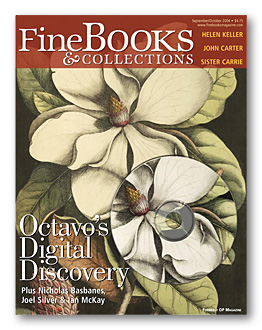 |
If you like the magazine, you'll also get our best subscription price, just $19.95 for your first year. This offer is not available on our web site - you must use the link above. Consider a gift subscription for your best customers: they'll remember your generosity with every issue.
Scott Brown is the editor of Fine Books & Collections magazine. He collects books by R. K. Narayan and Gary Soto.
Daniel Glaeser
Most book dealers have a story about how they found themselves in the book trade and I am no exception.\ I don't think there are many small kids who aspire to grow up to be used book dealers, but I may be as close as they come.
From my earliest memories of childhood, I have been fascinated by commerce. I loved everything that had to do with just about any aspect of commerce. I can remember when I was 6, teaching my 2 year old brother how to count using play money as my media for teaching. Whenever friends came over to play I would often suggest playing "store." Of course, I wanted to run the cash register: that was my favorite part. Add to this the fact that I was an early reader: I was already reading before I got to pre-school and when we arrived in Modesto mid-way through first grade I angered my teacher by reading the entire reading textbook (a year's worth of curriculum) my first weekend in her class. Books and commerce, commerce and books - I guess my childhood was a foreshadowing of what was to come.
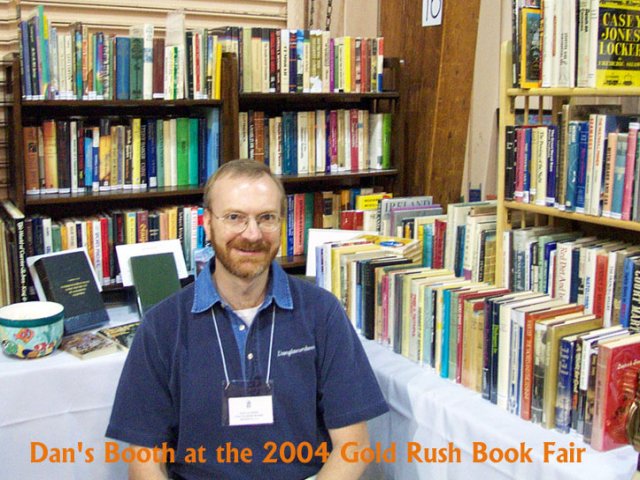
During college I truly became a voracious reader. In addition to the textbooks for my business classes (no surprise there), I was often reading as many as 10 books at once, just for fun. I never did find much interest in novels, but loved non-fiction, especially theology and church history. I also discovered the joy of used book stores. Every Thursday night the main street in downtown San Luis Obispo, California was closed off for a local Farmer's Market. For most of my 4 years at Cal Poly Thursday nights meant the trek downtown for fresh veggie's, ribs at McClintock's, and an hour or so at Leon's Book Store which was a favorite among Cal Poly students.
Just 2 weeks after graduation from Cal Poly, back in my hometown of Modesto, California, I received a phone call from the owners of Modesto's premier used book store Yesterday's Books. Since I had grown up with their children and had known them for over 10 years already, the invitation to work at the store was an easy one. In fact I was called at 10 in the morning, and started at 1 that afternoon. What started out as a six-week temporary position grew into a full-time position, one that I held for six years. During that time I started my seminary training, feeling a call into full time ministry. To help pay my seminary bills I started selling books mail-order and even signed up with a new Internet based dealer-to-dealer network called Interloc. My employers were aware of my moonlighting in the same industry and even gave it their blessing.
I left my employ with the Dorman's at Yesterday's Books in the spring of 1997, having joined a music-based missionary troupe based in California. For the next 6 years I spent my life on a bus traveling throughout the United States and 18 foreign countries, giving as many as 300 concerts a year. In 2002 I completed my third two-year tour of duty and knew it was time to come home, but not sure what I was to do when I returned.

What I knew is that I needed a non-traditional job because I wanted a flexible schedule that would leave the door open for ministry opportunities that would open up locally. Well, the Internet market for books had changed dramatically while I was on the road and it was easy to step back into what I knew well. Plus, I could run the business from my parent's home while I re-established myself financially and explored the next chapter in my saga.
So that's the current chapter in the life of this book dealer. I specialize in religion (surprise, surprise) hoping that a good inventory of Protestant and Catholic theology and history reference will enable me to be of service to busy pastors and seminarians. In addition to the Internet business, I exhibit at several book fairs each year as well as several home schooling conventions. And yes, the flexibility of a home-based on-line business has allowed time for local missionary opportunities. For the past three years I have worked as the assistant Christmas Kettle Co-coordinator for the Salvation Army in Modesto where I also serve as the Church Worship Leader.
Blessings!
Dan Glaeser operates Dan Glaeser Books in Modesto, CA and can be contacted at http://www.DanGlaeserBooks.com
A Comprehensive Guide to Book Listing
Sites
By Stuart Manley
Buying
and selling books on the web is becoming ever more complex, with a bewildering
range of sites available, all with different strengths, weaknesses and charges.
This
guide is an attempt to give clear summaries of each site.
From
the book buyer's point of view, it should help guide you towards the sites that
give best value for the particular kind of books you are looking for. This
means, generally speaking, the ones that charge little or no commission and
have good ethical control over the booksellers listing on the site.
From
the book seller's point of view, it should give clear information on the costs,
and the advantages and disadvantages of each site.
So
this guide concentrates on the factors that are important to both the buyer and
the seller: the overall cost of listing on each site, how accurately and
speedily books can be found within the site, how accurately and well the books
are catalogued, the quality and range of the books, the quality and probity of
the book sellers who list there and the amount of traffic that reaches the
site.
Other
factors such as site design and extra features or quirks are left for the users
to love or hate as they see fit!
This
guide is restricted to English language multiple listing sites with at least ¼ million books listed. Other language
sites and single store sites such as B&N, Powell's, Strand, etc., are not
included individually, although some are covered by the metasites. Relisting
sites (sites that take in other booksellers catalogues and relist them at a
higher price) are also excluded.
Metasites
Metasites
are sites that trawl many other listing sites - a 'one stop shop'. Apart from
the slightly longer time they take to complete each search (a significant
disadvantage only if you need to look up many titles in one session), they are
probably the most complete way to check on the availability and price of any
given title. If the title is very common, the metasite may 'rationalize' the
results to save too many being displayed. You can always go on to an individual
listing site if you wish to expand the results.
The
metasites do not charge commission, and the prices they display will reflect
the charges of the listing site they are reporting. To appear on a metasite,
all a book seller has to do is to join at least one of the listing sites that
the metasite covers.
The Metasites
AddAll http://used.addall.com
Covers the following sites: ABE, Alibris, AntiQbook,
Biblio, Biblion, Bibliophile, Bibliopoly, Books&Collectibles,
ChooseBooks/ZVAB, HalfCom, ILAB, MareMagnum, Powell's, Strand.
Features:
|
Quick search |
Y |
Sorts by site |
Y |
|
Advanced search |
Y |
Sorts by dealer |
Y |
|
Supports wild card * |
Y |
Sorts by country |
N |
|
Sorts by lowest price |
Y |
Allows price restriction |
Y |
|
Sorts by highest price |
Y |
Keyword search |
Y |
|
Sorts alphabetical |
Y |
Currency display |
ANY |
|
Sorts newest |
N |
Typical search time ** |
16 secs |
* but can reach only sites that support wild card. ** Typical search times are assuming a
fast web connection and an average time of day. If you have a
slower connection or
search at a busy time, the search times may be longer.
Traffic
(Alexa): 92. Linkage (Google): 501.
Extra feature: Displays a quotation to keep you
interested while it searches.
BookFinder.com http://www.bookfinder.com
Covers the following sites: A1Books, A1TechBooks,
ABE, AbookSearch, Alibris, Amazon (all sites), AntBo, AntiQbook, B&N, Biblio,
Biblion, BiggerBooks, BookAvenue, BookBestBuy, BookByte, BookCloseOuts,
Books&Collectibles, Buy, Chapitre, ChaptersIndigo, ChooseBooks/ZVAB,
Dymocks, EBay (partial), Ecampus, ElephantBooks, GlobalBookMart, Half,
HalfPriceComputerBooks, ILAB, MareMagnum, Overstock, Powell's, TextBookX,
TheBookCellar, TomFolio, TotalCampus, UsedBookCentral, ZVAB.
Features:
|
Quick search |
Y |
Sorts by site ** |
Y |
|
Advanced search |
Y |
Sorts by dealer |
N |
|
Supports wild card |
N |
Sorts by country |
N |
|
Sorts by lowest price |
Y |
Allows price restriction |
Y |
|
Sorts by highest price |
N |
Keyword search |
Y |
|
Sorts alphabetical * |
N |
Currency display |
ANY |
|
Sorts newest |
N |
Typical search time * |
24 secs |
* Some automatic alphabetisation. ** in Classic
mode only.
*** Typical search times are
assuming a fast web connection and an average time of day.
If you have a slower connection or search at a busy time, the search
times may be longer.
Traffic
(Alexa): 112. Linkage (Google): 186.
Extra feature: Can be set for French, German and
Italian searches.
Also: MegaBookSearch: http://www.megabooksearch.com
Google
http://www.google.com
General search sites such as Google are unable to search
databases, therefore many books that appear on the specialised booksearch sites
will be missed. However, they have great power to search static pages, and many
book sellers advertise their books in this way. So if AddAll and BookFinder
have failed to locate a title, Google can sometimes come to your rescue.
You will need to use their advanced search page if
you wish to avoid being deluged with irrelevant results. Typical search time: 4
seconds.
Some other
similar general search sites:
Altavista http://www.altavista.com
Ask
Jeeves http://www.ask.com
Hotbot http://www.hotbot.com
Infospace http://www.infospace.com
Lycos http://www.lycos.com
Searchy http://www.searchy.co.uk
TRAFFIC: The
amount of traffic that a site attracts is one of the key factors in estimating
how likely a site may achieve significant sales. The figures given in the
charts above are the most recent Alexa 'reach' average. For instance, a 'reach'
figure of 56 means that out of every million URL re quests from an Alexa toolbar, an average of 56
requested that site (most recent 3-month average). But, as Alexa themselves
admit, these figure are only approximate, especially for the lesser sites. In
any case they only cover Alexa originated requests.
Google linkage data is another indication of traffic,
but again, only a guide. Google linkage figures are per 100 links, i.e. 56 =
5,600 links.
None of this gives any indication of the quality of
the customers attracted, so many of the smaller quality sites can punch well
over their weight in sales value achieved relative to traffic and linkage.
So treat
the traffic figures with caution, but at least it is an indication. Until a
feasible alternative is suggested, it is the best we can offer!
Find out
more: http://pages.alexa.com/prod_serv/traffic_learn_more.html
Listing
Sites
Now we come to the real meat of this guide - the
individual listing sites. Grading listing sites is notoriously difficult; there
are so many factors:
The book buyer wants a fast, easy to use site
offering a large range of books at the best prices. The buyer also wants to
have confidence that the books will be well described and that the book sellers
will be honest, professional, speedy and fair.
The book seller wants a site reaching the widest
range of potential customers at a reasonable cost and offering ease of
operation and good technical support.
There is no one site that offers all these qualities;
each has its strengths and its weaknesses.
Some sites are better for buying and selling scarce
and valuable books, while others are better for inexpensive books. Some sites
enforce high standards from their book sellers; others have few effective
safeguards or moderation and include some questionable traders.
Nor is the cost to the book seller straightforward.
Some sites may charge a high commission, but may have no listing fees and other
cost savings, or may have particularly good market penetration. Others may
charge little to list but do not have enough traffic to return significant
orders. In addition, there are hidden costs; some sites are difficult or time
consuming to operate, be it in their uploading arrangements or by mis-matched
or curtailed entries.
From the buyer's point of view, a site claiming 20
million books listed may seem a better bet than one claiming 1 million books,
but this is not necessarily true if 15 million of the 20 million are John
Grisham paperbacks! If the quality of the site with 1 million books is high, it
may offer a better range of hard-to-find books or ephemera. Another increasing
annoyance is the recent growth of PoD books on some larger sites - 'Print on
Demand' photocopies that clutter the listings, making it difficult to find the
real books. In addition, some sites allow relisters - dealers that relist other
booksellers books at a higher price which also clutters the listings. These are
considered to be an adverse factors for both buyers and sellers and noted as
such.
Equally, the price of an identical book may vary from
site to site, with book sellers adding to their base price for listing sites
that have high charges (or, alternatively, offering you a discount when you
order direct).
With all this in mind, we have assembled an
at-a-glance cross-table showing the main strengths and weaknesses of each site.
Some areas are objective, such as listing fees, commissions, etc.; but others
are, by force, subjective. We have done our best to be impartial, but are happy
to listen to comments if you do not agree with our assessment.
Costs and performances on any given site can change.
We will update to new information as it comes our way.
Detailed information on each site follows the
cross-table.
Cross-Table
Summary of all Significant
English
Language Used/Antiquarian Listing Sites
Key: Positive
factors are shown in GREEN and negative factors in RED. Neutral factors are shown in BLACK.
|
LISTING |
Listing |
Comm. |
Other |
Search |
Overall |
Stock |
Dealer |
Traffic |
|
|
|
SITE NAME |
charge |
charge |
costs |
features |
quality |
quantity |
contact |
& sales |
|
|
|
ABAA ** |
$48 |
NONE |
LOW. |
9/12 |
V. HIGH |
SMALL |
FULL |
+ |
|
|
|
ABE PoD |
$53 |
8% |
LOW |
11/12 |
VARIABLE |
LARGE |
LIMITED |
++++ |
|
|
|
ABooksearch |
$20 |
NONE |
LOW |
5/12 |
VARIABLE |
SMALL |
FULL |
|
|
|
|
Alibris |
$40 |
15% |
LOW |
10/12 |
VARIABLE |
LARGE |
LOW |
++++ |
|
|
|
Amazon.com PoD |
$40 |
15% |
HIGH |
7/12 |
LOW |
LARGE |
LIMITED |
++++ |
|
|
|
Amazon.co.uk PoD |
$40 |
15% |
HIGH |
7/12 |
LOW |
LARGE |
LIMITED |
+++ |
|
|
|
AntBo ** |
$86 O |
R 8% |
LOW |
9/12 |
HIGH |
SMALL |
FULL |
+ |
|
|
|
AntiQbook |
$56 |
NONE |
LOW |
9/12 |
HIGH |
SMALL |
FULL |
++ |
|
|
|
Biblio |
$40 |
NONE |
LOW |
12/12 |
MEDIUM |
LARGE |
FULL |
+++ |
|
|
|
Biblion |
$46 |
NONE |
LOW |
9/12 |
MEDIUM |
SMALL |
FULL |
+ |
|
|
|
Bibliophile |
NONE |
NONE |
LOW |
4/12 |
VARIABLE |
SMALL |
FULL |
+ |
|
|
|
Bibliopolis |
|
|
LOW |
/12 |
MEDIUM |
V. SMALL |
FULL |
|
|
|
|
Bibliopoly |
$53 |
NONE |
LOW |
7/12 |
V. HIGH |
V. SMALL |
FULL |
+ |
|
|
|
BookAvenue |
$20 |
NONE |
LOW |
2/12 |
VARIABLE |
SMALL |
LIMITED |
+ |
|
|
|
BookCellar |
NONE |
20% |
LOW |
6/12 |
MEDIUM |
SMALL |
NONE |
+ |
|
|
|
Books&Collectibles |
$46 |
NONE |
LOW |
6/12 |
VARIABLE |
SMALL |
FULL |
+ |
|
|
|
ChooseBooks/ZVAB |
$35 O |
R 10% |
LOW |
8/12 |
VARIABLE |
MEDIUM |
FULL |
++ |
|
|
|
eBay |
$50+ |
8% |
HIGH |
9/12 |
LOW |
MEDIUM |
LOW |
++++ |
|
|
|
Froogle |
NONE |
NONE |
LOW |
6/12 |
VARIABLE |
LARGE |
FULL |
++ |
|
|
|
Global Book Mart |
NONE |
10% |
LOW |
4/12 |
VARIA BLE |
SMALL |
LIMITED |
|
|
|
|
IBookNet |
$36 |
NONE |
LOW |
8/12 |
MEDIUM |
V. SMALL |
FULL |
|
|
|
|
ILAB-LILA ** |
$48 |
NONE |
LOW |
8/12 |
V. HIGH |
V. SMALL |
FULL |
+ |
|
|
|
IOBA ** |
$8 |
NONE |
LOW |
9/12 |
MEDIUM |
V. SMALL |
FULL |
|
|
|
|
Popula/PopShops |
$10 |
10% |
LOW |
7/12 |
VARIABLE |
V. SMALL |
FULL |
++ |
|
|
|
TomFolio |
$45 |
NONE |
LOW |
9/12 |
MEDIUM |
SMALL |
FULL |
++ |
|
|
|
UKBookWorld |
$9 |
NONE |
LOW |
6/12 |
MEDIUM |
SMALL |
FULL |
+ |
|
|
|
UsedBookCentral |
$16 |
NONE |
LOW |
7/12 |
VARIABLE |
SMALL |
FULL |
+ |
|
|
|
WantedBooks |
$20 |
NONE |
LOW |
6/12 |
VARIABLE |
SMALL |
FULL |
|
|
|
|
|
|
|
|
|
|
|
|
|
|
|
** Members only. *** Other options available * Adjusted for the used/antiquarian book portion of traffic
(E).
'PRINT-ON-DEMAND' photocopies clutter listings -
sites where this is becoming a problem are marked thus: PoD
METASITES
TRAFFIC
|
AddAll |
PoD |
|
|
9/12 |
|
V. LARGE |
|
+++ |
|
|
|
BookFinder.com |
PoD |
|
|
6/12 |
|
V. LARGE |
|
+++ |
|
|
TRAFFIC
& SALES : Each site is awarded stars based on Alexis and
Google ratings, combined with known experience and such sales results that can
be gleaned.
++++ = Mainstream site with heavy traffic, large range and
proven sales.
+++ = Significant traffic, range and
sales.
++ = Solid traffic, range and sales.
+ =
Established site, often with a niche market.
No stars =
New or limited site.
N.B. As noted on page 3,
this is only a ROUGH GUIDE - quite apart from the imprecise nature of the
ratings, any one site may be better or worse for a particular kind of book. So,
although Traffic and Sales are vital factors when choosing a venue, or how
likely they are to have the range of books you seek, we are only able to offer
this very approx-imate guidance.
Detailed Breakdown of the Listing Sites
Key positive factors have been highlighted in
GREEN. (E) =
Estimated.
ABAA
(Antiquarian Booksellers Association of America) http://abaa.org
|
Monthly listing
charge * |
$48 |
|
Quick search |
Y |
|
Commission charge |
None |
|
Advanced search |
Y |
|
Site joining fee |
Membership |
|
Supports wild
card |
N |
|
Participating
dealers |
450+ |
|
Keyword search |
Y |
|
Range of books |
Medium |
|
Sorts by price |
Y |
|
Quality of books |
Very high |
|
Sorts
alphabetical |
Y |
|
Quantity of books |
Small |
|
Sorts newest |
** |
|
Trading ethics |
High |
|
Sorts by dealer |
Y |
|
Technical ease |
Good |
|
Sorts by country |
N |
|
Dealer
Restrictions |
ABAA members |
|
Allows price
restriction |
Y |
|
Currency display |
$ + conversion |
|
Full descriptions |
Y |
|
Typical search
time |
Very fast |
|
Direct dealer contact |
Y |
* For 20,000 titles **
Limited newest search
Search
results from sample 8 item basket: 217. Total
listings: 2.5m. (E)
Notes: Only
ABAA members may list here. Code of Ethics policed by an ethics committee.
Although many items listed here will also be listed elsewhere, the site
includes a higher than usual proportion of exclusive items. Wants service.
Catalogue service. Stolen book database. News page. Newsletter.
ABE
(Advance Book Exchange) http://www.abebooks.com
|
Monthly listing
charge * |
$53 - $65 |
|
Quick search |
Y |
|
Commission charge |
8% |
|
Advanced search |
Y |
|
Site joining fee |
$25 |
|
Supports wild
card |
N |
|
Participating
dealers |
13,000+ |
|
Keyword search |
Y |
|
Range of books PoD |
Very Large |
|
Sorts by price |
Y |
|
Quality of books |
Variable |
|
Sorts
alphabetical |
Y |
|
Quantity of books |
Very large |
|
Sorts newest |
Y |
|
Trading ethics |
Average |
|
Sorts by dealer |
Y |
|
Technical ease |
Average |
|
Sorts by country |
Y |
|
Dealer
Restrictions |
None ** |
|
Allows price
restriction |
Y |
|
Currency display |
$ + conversion *** |
|
Full descriptions |
Y |
|
Typical search
time |
Fast |
|
Direct dealer
contact **** |
Y |
* For 20,000 titles. ** 80% fulfilment.
*** Or £ or € sites. ****
Limited contact
Search
results from sample 8 item basket: 12,250. Total
listings: 70m.
Notes: The
largest site on the web for specifically used/antiquarian books, although
common books will have thousands of duplicates. along with PoD 'Print on
Demand' photocopies. Has become too large to police every bookseller effectively
and rates sellers by quantity of fulfilment rather than quality of service.
Money back guarantee. Charges commission, so a listing may be available
elsewhere for less. Wants service. Newsletter. Book sellers listed with full
contact details (dot com site only). Free basic book database (HomeBase)
available. Additional British, French and German sites (.co.uk; .fr; .de).
Abookseach
http://www.abooksearch.com
|
Monthly listing
charge * |
$20 |
|
Quick search |
Y |
|
Commission charge |
None |
|
Advanced search
** |
N |
|
Site joining fee |
None |
|
Supports wild
card |
N |
|
Participating
dealers |
150+ |
|
Keyword search |
Y |
|
Range of
books |
Small |
|
Sorts by price |
Y |
|
Quality of books |
Variable |
|
Sorts
alphabetical |
N |
|
Quantity of books |
Very small |
|
Sorts newest |
N |
|
Trading ethics |
Average |
|
Sorts by dealer |
N |
|
Technical ease |
Average |
|
Sorts by country |
N |
|
Dealer
Restrictions |
None |
|
Allows price
restriction |
N |
|
Currency display |
$ + conversion |
|
Full descriptions |
Y |
|
Typical search
time |
Slow |
|
Direct dealer contact |
Y |
* For 20,000 titles
** Keyword search available
Search
results from sample 8 item basket: 212. Total
listings: 1m. (E)
Notes: Small
California based non-commission charging site. Book sellers listed with full
contact details.
Alibris
http://www.alibris.com
|
Monthly listing
charge* |
$40 |
|
Quick search |
Y |
|
Commission charge |
15% |
|
Advanced search |
Y |
|
Site joining fee |
$50 |
|
Supports wild
card |
Y |
|
Participating
dealers |
10,000+ |
|
Keyword search |
Y |
|
Range of books |
Very Large |
|
Sorts by price |
Y |
|
Quality of books |
Variable |
|
Sorts
alphabetical |
Y |
|
Quantity of books |
Very large |
|
Sorts newest |
N |
|
Trading ethics |
Good |
|
Sorts by dealer |
Y |
|
Technical ease |
Good |
|
Sorts by country |
N |
|
Dealer
Restrictions |
None ** |
|
Allows price
restriction |
Y |
|
Currency display |
$ + conversion |
|
Full descriptions |
Y |
|
Typical search
time |
Fast |
|
Direct dealer
contact *** |
N |
* For 20,000 titles. ** 85% fulfilment ***
Query contact possible
Search
results from sample 8 item basket: 5,460. Total
listings: 35m.
Notes: Large
range of listings but with many duplicates. Effective money back guarantee. Charges commission, so a listing may
be available elsewhere minus commission. Rates sellers by fulfilment.
Bookstores named against listing and sending a query is possible, but no other
contact details. Wants service. Newsletter. Free basic book database available
shortly. Also lists movies and music.
Amazon.com
http://www.amazon.com
|
Monthly listing
charge * |
$40 - $47 |
|
Quick search |
Y |
|
Commission charge |
15% |
|
Advanced search |
Y |
|
Site joining fee |
None |
|
Supports wild
card |
Y |
|
Participating
dealers |
20,000+ |
|
Keyword search |
Y |
|
Range of books PoD |
Large |
|
Sorts by price |
Y |
|
Quality of books |
Variable |
|
Sorts
alphabetical |
Y |
|
Quantity of books |
Very Large |
|
Sorts newest |
N |
|
Trading ethics |
Poor |
|
Sorts by dealer |
N |
|
Technical ease |
Poor |
|
Sorts by country |
N |
|
Dealer
Restrictions |
None |
|
Allows price
restriction |
N |
|
Currency display |
$ ** |
|
Full descriptions |
N |
|
Typical search
time |
Fast |
|
Direct dealer
contact *** |
Y |
* Unlimited **
or £ or € sites *** With limits
Search
results from sample 8 item basket: 13,000 approx. Total listings: 70m. (E)
Notes: Large
range of listings but with many duplicates. Returns policy. Charges commission,
so a listing may be available elsewhere minus commission. Rates sellers by
feedback, which is a guide but subject to manipulation. Limited book seller
contact. Annoying search mis-matches (i.e. wrong title, or says an item is an
audio book, or large print, etc., when it is not). Additional British,
Canadian, French, German and Japanese sites (.co.uk; .ca; .fr; .de; co.jp).
Also lists a large range of other products.
Amazon.co.uk
http://www.amazon.co.uk
|
Monthly listing
charge * |
$40 - $47 |
|
Quick search |
Y |
|
Commission charge |
15% |
|
Advanced search |
Y |
|
Site joining fee |
None |
|
Supports wild
card |
Y |
|
Participating
dealers |
20,000+ |
|
Keyword search |
Y |
|
Range of books PoD |
Large |
|
Sorts by price |
Y |
|
Quality of books |
Variable |
|
Sorts alphabetical |
Y |
|
Quantity of books |
Very Large |
|
Sorts newest |
N |
|
Trading ethics |
Poor |
|
Sorts by dealer |
N |
|
Technical ease |
Poor |
|
Sorts by country |
N |
|
Dealer
Restrictions |
None |
|
Allows price
restriction |
N |
|
Currency display |
$ ** |
|
Full descriptions |
N |
|
Typical search
time |
Fast |
|
Direct dealer
contact *** |
Y |
* Unlimited **
or £ or € sites *** With limits
Search
results from sample 8 item basket: 10,000 approx. Total listings: 50m. (E)
Notes: Large
range of listings but with many duplicates. Returns policy. Charges commission,
so a listing may be available elsewhere minus commission. Rates sellers by
feedback, which is a guide but subject to manipulation. Limited book seller
contact. Annoying search mis-matches.
Additional American, Canadian, French, German and Japanese sites (.com;
.ca; .fr; .de; co.jp). Also lists a large range of other products.
Amazon.de
(Germany) http://www.amazon.de
|
Monthly listing
charge * |
$40 - $47 |
|
Quick search |
Y |
|
Commission charge |
15% |
|
Advanced search |
Y |
|
Site joining fee |
None |
|
Supports wild
card |
Y |
|
Participating
dealers |
20,000+ |
|
Keyword search |
Y |
|
Range of books |
Large |
|
Sorts by price |
Y |
|
Quality of books |
Variable |
|
Sorts
alphabetical |
Y |
|
Quantity of books |
Very Large |
|
Sorts newest |
N |
|
Trading ethics |
Poor |
|
Sorts by dealer |
N |
|
Technical ease |
Poor |
|
Sorts by country |
N |
|
Dealer
Restrictions |
None |
|
Allows price
restriction |
N |
|
Currency display |
$ ** |
|
Full descriptions |
N |
|
Typical search
time |
Fast |
|
Direct dealer
contact *** |
Y |
* Unlimited **
or £ or € sites *** With limits
Search
results from sample 8 item basket: 4,000 approx. Total listings: 20m. (E)
Notes: Large
range of listings but with many duplicates. Returns policy. Charges commission,
so a listing may be available elsewhere minus commission. Rates sellers by
feedback, which is a guide but subject to manipulation. Limited book seller
contact. Annoying search mis-matches. Additional American, British, Canadian,
French and Japanese sites (.com; co.uk; .ca; .fr; co.jp). Also lists a large
range of other products.
AntBo
(Antiquarian Books Online) http://www.antbo.com
|
Monthly listing
charge * |
$86 |
|
Quick search |
Y |
|
Commission charge ** |
None |
|
Advanced search |
Y |
|
Site joining fee |
None |
|
Supports wild
card |
Y |
|
Participating
dealers |
300+ |
|
Keyword search |
Y |
|
Range of books |
Small |
|
Sorts by price |
Y |
|
Quality of books |
High |
|
Sorts
alphabetical |
Y |
|
Quantity of books |
Small |
|
Sorts newest |
Y |
|
Trading ethics |
Via seller |
|
Sorts by dealer |
N |
|
Technical ease |
Average |
|
Sorts by country |
N |
|
Dealer
Restrictions |
Full trade only |
|
Allows price
restriction |
N |
|
Currency display |
€ |
|
Full descriptions |
Y |
|
Typical search
time |
Fast |
|
Direct dealer contact |
Y |
* For 20,000 titles (at
current discount rate). ** Alternative is $18.50 monthly + 8%.
Search
results from sample 8 item basket: 704. Total
listings: 3.5m.
Notes: Mainly
European booksellers of quality. Book
sellers listed with full contact details
AntiQbook http://www.antiqbook.com
|
Monthly listing
charge * |
$56 |
|
Quick search |
Y |
|
Commission charge |
None |
|
Advanced search |
Y |
|
Site joining fee |
None |
|
Supports wild
card |
N |
|
Participating
dealers |
400+ |
|
Keyword search |
N |
|
Range of books |
Medium |
|
Sorts by price |
Y |
|
Quality of books |
High |
|
Sorts
alphabetical |
Y |
|
Quantity of books |
Small |
|
Sorts newest |
Y |
|
Trading ethics |
Good |
|
Sorts by dealer |
Y |
|
Technical ease |
Good |
|
Sorts by country |
Y |
|
Dealer
Restrictions |
None |
|
Allows price
restriction |
N |
|
Currency display |
$ £ € ¥ |
|
Full descriptions |
Y |
|
Typical search
time |
Fast |
|
Direct dealer contact |
Y |
* For 20,000 titles
Search
results from sample 8 item basket: 704. Total
listings: 3.8m.
Notes:
European based site, but with good international support of better class book
sellers. Book sellers listed with
full contact details
Biblio http://biblio.com (incorporating
Bookopoly)
|
Monthly listing
charge |
None |
|
Quick search |
Y |
|
Commission charge |
7.5 - 15% |
|
Advanced search |
Y |
|
Site joining fee |
None |
|
Supports wild
card |
Y |
|
Participating
dealers |
3,500 |
|
Keyword search |
Y |
|
Range of books |
Medium |
|
Sorts by price |
Y |
|
Quality of books |
Good |
|
Sorts
alphabetical |
Y |
|
Quantity of books |
Medium |
|
Sorts newest |
Y |
|
Trading ethics |
Good |
|
Sorts by dealer |
Y |
|
Technical ease |
Good |
|
Sorts by country |
Y |
|
Dealer
Restrictions |
None |
|
Allows price
restriction |
Y |
|
Currency display |
ANY |
|
Full descriptions |
Y |
|
Typical search
time |
Fast |
|
Direct dealer contact |
Y |
* For 20,000
titles ** Or: 15% commission and no
listing charge.
Search
results from sample 8 item basket: 3,149. Total
listings: 20m.
Notes:
The largest and most visible of the commission-free sites. Faultless search
engine. Book sellers listed with full contact details. Book Forum. Wants
service. Option of monthly listing charge or commission. Acquired Bookopoly.
Biblion http://www.biblion.com
|
Monthly listing
charge * |
$38 - $46 |
|
Quick search |
Y |
|
Commission charge |
None |
|
Advanced search |
Y |
|
Site joining fee |
None |
|
Supports wild
card |
N |
|
Participating
dealers |
400+ |
|
Keyword search |
Y |
|
Range of books |
Small |
|
Sorts by price |
Y |
|
Quality of books |
Medium |
|
Sorts
alphabetical |
Y |
|
Quantity of books |
Small |
|
Sorts newest |
Y |
|
Trading ethics |
Good |
|
Sorts by dealer |
N |
|
Technical ease |
Good |
|
Sorts by country |
N |
|
Dealer
Restrictions |
None |
|
Allows price
restriction |
Y |
|
Currency display |
ANY |
|
Full descriptions |
Y |
|
Typical search
time |
Fast |
|
Direct dealer contact |
Y |
* For 20,000 titles
Search
results from sample 8 item basket: 424. Total
listings: 3m. (E).
Notes: Non-commission
charging site. Book sellers listed with full contact details.
Bibliophile http://www.bibliophile.net
|
Monthly listing charge |
None * |
|
Quick search |
N |
|
Commission charge |
None |
|
Advanced search |
Y |
|
Site joining fee |
None |
|
Supports wild
card |
Y |
|
Participating
dealers |
600+ |
|
Keyword search |
N |
|
Range of books |
Small |
|
Sorts by price |
N |
|
Quality of books |
Variable |
|
Sorts
alphabetical |
N |
|
Quantity of books |
Small |
|
Sorts newest |
Y |
|
Trading ethics |
Good |
|
Sorts by dealer |
N |
|
Technical ease |
Good |
|
Sorts by country |
N |
|
Dealer
Restrictions |
None |
|
Allows price
restriction |
N |
|
Currency display |
$ |
|
Full descriptions |
Y |
|
Typical search time |
Medium |
|
Direct dealer contact |
Y |
* Monthly
charge planned
Search
results from sample 8 item basket: 454. Total
listings: 3m. (E)
Notes: Non-commission
charging site. Currently no listing charge. Book sellers listed with full
contact details.
Bibliopoly http://www.bibliopoly.com
|
Monthly listing
charge * |
$53 |
|
Quick search |
N |
|
Commission charge |
None |
|
Advanced search |
Y |
|
Site joining fee |
None |
|
Supports wild
card |
Y |
|
Participating
dealers |
100+ |
|
Keyword search |
Y |
|
Range of books |
Small |
|
Sorts by price |
N |
|
Quality of books |
Very High |
|
Sorts
alphabetical |
N |
|
Quantity of books |
Very small |
|
Sorts newest |
Y |
|
Trading ethics |
Very High |
|
Sorts by dealer |
N |
|
Technical ease |
Average |
|
Sorts by country |
N |
|
Dealer
Restrictions |
Restricted |
|
Allows price
restriction |
Y |
|
Currency display |
$ £ € |
|
Full descriptions |
Y |
|
Typical search
time |
Fast |
|
Direct dealer contact |
Y |
* For 20,000 titles. Extra 0.1% p.a. charged for
total listed stock value over £100,000.
Search
results from sample 8 item basket: 14. Total
listings: ¼m. (E)
Notes: Small
non-commission charging site of selected dealers. Book sellers listed with full
contact details. Specialists in manuscripts - of little use for books. The site
functions in English, French, German, Italian and Spanish and offer a
multi-lingual category search facility.
BookAvenue http://www.bookavenue.com
|
Monthly listing
charge * |
$20 |
|
Quick search |
Y |
|
Commission charge |
None |
|
Advanced search
(partial) |
Y |
|
Site joining fee |
None |
|
Supports wild
card |
N |
|
Participating
dealers |
215 |
|
Keyword search |
N |
|
Range of books |
Small |
|
Sorts by price |
N |
|
Quality of books |
Variable |
|
Sorts
alphabetical |
N |
|
Quantity of books |
Small |
|
Sorts newest |
N |
|
Trading ethics |
High |
|
Sorts by dealer |
N |
|
Technical ease |
Good |
|
Sorts by country |
N |
|
Dealer
Restrictions |
None |
|
Allows price
restriction |
N |
|
Currency display |
$ |
|
Full descriptions |
N |
|
Typical search
time |
Fast |
|
Direct dealer
contact ** |
N |
* For 20,000 titles **
email only
Search
results from sample 8 item basket: 203. Total
listings: 1m. (E)
Notes: Non-commission
charging site. Book sellers listed with email only contact details. Wants
service.
BookCellar
http://www.thebookcellar.com
|
Monthly listing charge |
None |
|
Quick search |
Y |
|
Commission charge |
20% |
|
Advanced search |
N |
|
Site joining fee |
None |
|
Supports wild
card (partial) |
Y |
|
Participating
dealers |
300+ (E) |
|
Keyword search |
N |
|
Range of books |
Small |
|
Sorts by price |
Y |
|
Quality of books |
Medium |
|
Sorts
alphabetical |
Y |
|
Quantity of books |
Small |
|
Sorts newest |
Y |
|
Trading ethics |
Good |
|
Sorts by dealer |
N |
|
Technical ease |
Good |
|
Sorts by country |
N |
|
Dealer
Restrictions |
None |
|
Allows price
restriction |
N |
|
Currency display |
$ |
|
Full descriptions |
Y |
|
Typical search
time |
Fast |
|
Direct dealer
contact |
N |
Search
results from sample 8 item basket: 760. Total
listings: 4m. (E)
Notes: Non-commission
charging site. Book sellers listed with email only contact details. Wants
service.
Books&Collectibles http://www.booksandcollectibles.com.au
|
Monthly listing
charge * |
$41-$50 * |
|
Quick search |
N |
|
Commission charge |
None |
|
Advanced search |
Y |
|
Site joining fee |
None |
|
Supports wild
card |
N |
|
Participating
dealers |
150+ |
|
Keyword search |
N |
|
Range of books |
Small |
|
Sorts by price |
Y |
|
Quality of books |
Variable |
|
Sorts
alphabetical |
Y |
|
Quantity of books |
Small |
|
Sorts newest |
N |
|
Trading ethics |
Good |
|
Sorts by dealer |
N |
|
Technical ease |
Good |
|
Sorts by country |
Y |
|
Dealer
Restrictions |
None |
|
Allows price
restriction |
N |
|
Currency display |
Any |
|
Full descriptions |
Y |
|
Typical search time |
Fast |
|
Direct dealer contact |
Y |
* For 20,000 titles.
Or 15% commission
Search
results from sample 8 item basket: 407. Total
listings: 2m. (E)
Notes: Australian
based non-commission charging site. Book sellers listed with full contact
details.
ChooseBooks/ZVAB http://www.choosebooks.com
ZVAB/Choosebooks
http://www.zvab.com
|
Monthly listing charge |
None |
|
Quick search |
N |
|
Commission charge |
10% * |
|
Advanced search |
Y |
|
Site joining fee |
None |
|
Supports wild
card |
Y |
|
Participating
dealers |
1,980 |
|
Keyword search |
Y |
|
Range of books |
Medium |
|
Sorts by price |
Y |
|
Quality of books |
Variable |
|
Sorts
alphabetical |
Y |
|
Quantity of books |
Medium |
|
Sorts newest |
N |
|
Trading ethics |
Good |
|
Sorts by dealer |
N |
|
Technical ease |
Good |
|
Sorts by country |
N |
|
Dealer
Restrictions |
None |
|
Allows price
restriction |
Y |
|
Currency display |
$ + conversion |
|
Full descriptions |
Y |
|
Typical search
time |
Fast |
|
Direct dealer contact |
Y |
* Maximum of $35 p.m. per 20,000 titles at 10%
commission, 5% commission on all sales thereafter.
Search
results from sample 8 item basket: 1,785 Total
listings: 12m. (E)
* Listing
fee/lower commission also available. Large German-based European site recently
combined with ChooseBooks. Book
sellers listed with full contact details.
eBay http://www.ebay.com
|
Monthly listing
charge |
$50 * |
|
Quick search ** |
Y |
|
Commission charge |
8% * |
|
Advanced search |
Y |
|
Site joining fee |
None |
|
Supports wild
card |
Y |
|
Participating
dealers |
10,000+ (E) |
|
Keyword search |
Y |
|
Range of books |
Low |
|
Sorts by price |
Y |
|
Quality of books |
Low |
|
Sorts
alphabetical |
Y |
|
Quantity of books |
Medium * |
|
Sorts newest |
Y |
|
Trading ethics |
Low |
|
Sorts by dealer |
N |
|
Technical ease |
Low |
|
Sorts by country |
N |
|
Dealer
Restrictions |
None |
|
Allows price
restriction |
N |
|
Currency display |
Any |
|
Full descriptions |
N |
|
Typical search
time |
Fast |
|
Direct dealer
contact ** |
N |
* Many
variable factors **
Limited
Search
results from sample 8 item basket: 466. Total
listings: 2m. (E)
Notes: Large
range of listings but with many duplicates. Charges commission and has a
cumbersome system geared to auctions rather than stable catalogues. The auction
nature of the site means that full range not available at any one time. Rates
sellers by feedback, which is a guide but subject to manipulation. Beware of
scams and inaccurate listings. Limited (anonymous) book seller contact.
Additional eBay sites for many other countries. Also lists a large range of
other products.
Froogle http://froogle.google.com
|
Monthly listing charge |
None |
|
Quick search |
Y |
|
Commission charge |
None |
|
Advanced search |
Y |
|
Site joining fee |
None |
|
Supports wild
card |
N |
|
Participating
dealers |
3,000 (E) |
|
Keyword search |
N |
|
Range of books |
Large |
|
Sorts by price |
N |
|
Quality of books |
Variable |
|
Sorts
alphabetical |
N |
|
Quantity of books |
Large |
|
Sorts newest |
N |
|
Trading ethics |
None |
|
Sorts by dealer |
Y |
|
Technical ease |
Fair |
|
Sorts by country |
N |
|
Dealer
Restrictions |
US only at present |
|
Allows price
restriction |
Y |
|
Currency display |
$ + conversion |
|
Full descriptions |
Y |
|
Typical search
time |
Fast |
|
Direct dealer contact |
Y |
Search
results from sample 8 item basket: 2,000*. Total
listings: 15m. (E)
*
Duplicates and non-books makes exact total vary.
Notes: Product
division of Google. Booksellers listed with full contact details. Some sites,
such as TomFolio, include Froogle coverage as part of their service. The search
page is designed for all products rather than just books, so finding a specific
book or edition can be more difficult than on dedicated sites.
GlobalBookMart http://www.gbmbooks.com
|
Monthly listing charge |
None |
|
Quick search |
Y |
|
Commission charge |
10% |
|
Advanced search |
N |
|
Site joining fee |
None |
|
Supports wild
card |
N |
|
Participating
dealers |
100+ |
|
Keyword search |
Y |
|
Range of books |
Small |
|
Sorts by price |
N |
|
Quality of books |
Variable |
|
Sorts
alphabetical |
N |
|
Quantity of books |
Very small |
|
Sorts newest |
N |
|
Trading ethics |
Good |
|
Sorts by dealer |
Y |
|
Technical ease |
Good |
|
Sorts by country |
N |
|
Dealer
Restrictions |
None |
|
Allows price
restriction |
N |
|
Currency display |
$ |
|
Full descriptions |
Y |
|
Typical search
time |
Medium |
|
Direct dealer
contact * |
N |
* email
only
Search
results from sample 8 item basket: 218. Total
listings: 1m. (E)
Notes: Small
commission charging site with no monthly listing charge. Book sellers listed
with email only contact details. Newsletter.
IbookNet
(Independent Booksellers' Network) http://www.ibooknet.com
|
Monthly listing
charge * |
$36 |
|
Quick search |
Y |
|
Commission charge |
None |
|
Advanced search |
Y |
|
Site joining fee
** |
$91 |
|
Supports wild
card |
Y |
|
Participating
dealers |
27 |
|
Keyword search |
Y |
|
Range of books |
Small |
|
Sorts by price |
Y |
|
Quality of books |
Good |
|
Sorts
alphabetical |
Y |
|
Quantity of books |
Very small |
|
Sorts newest |
N |
|
Trading ethics |
Good |
|
Sorts by dealer |
N |
|
Technical ease |
Good |
|
Sorts by country |
N |
|
Dealer
Restrictions |
None |
|
Allows price
restriction |
N |
|
Currency display |
$ £ € ¥ |
|
Full descriptions |
Y |
|
Typical search
time |
Medium |
|
Direct dealer contact |
Y |
* For 20,000 titles.
Includes dual AntiQbook
listing. ** Part shareholder. Full shareholder $364.
Search
results from sample 8 item basket: 62. Total
listings: 100k.
Notes: Small
UK non-commission charging site. Book sellers listed with full contact details.
Newsletter. Co-operative.
ILAB-LILA
(International League of Antiquarian Booksellers) http://www.ilab-lila.com
|
Monthly listing
charge * |
$48 |
|
Quick search |
N |
|
Commission charge |
None |
|
Advanced search |
Y |
|
Site joining fee |
Membership |
|
Supports wild
card |
N |
|
Participating
dealers |
400+ |
|
Keyword search |
Y |
|
Range of books |
Medium |
|
Sorts by price |
N |
|
Quality of books |
Very High |
|
Sorts
alphabetical |
Y |
|
Quantity of books |
Small |
|
Sorts newest |
Y |
|
Trading ethics |
High |
|
Sorts by dealer |
N |
|
Technical ease |
Good |
|
Sorts by country |
Y |
|
Dealer
Restrictions |
ILAB members |
|
Allows price
restriction |
Y |
|
Currency display |
$ +
conversion |
|
Full descriptions |
Y |
|
Typical search
time |
Fast |
|
Direct dealer contact |
Y |
* For 20,000 titles
Search
results from sample 8 item basket: 494, Total
listings: 3m. (E)
Notes: Only
ILAB affiliates may list here. Code of Ethics policed by an ethics committee.
Although many items listed here will also be listed elsewhere, the site
includes a higher than usual proportion of exclusive items. Wants service.
Catalogue service. News page. Newsletter.
IOBA
(Independent Online Booksellers' Association)
http://www.ioba.org
|
Monthly listing
charge * |
$8 |
|
Quick search |
N |
|
Commission charge |
None |
|
Advanced search |
Y |
|
Site joining fee |
None |
|
Supports wild
card |
Y |
|
Participating
dealers |
100+ |
|
Keyword search |
Y |
|
Range of books |
Small |
|
Sorts by price |
Y |
|
Quality of books |
Good |
|
Sorts alphabetical |
Y |
|
Quantity of books |
Very small |
|
Sorts newest |
N |
|
Trading ethics |
High |
|
Sorts by dealer |
Y |
|
Technical ease |
Good |
|
Sorts by country |
N |
|
Dealer
Restrictions |
IOBA members |
|
Allows price
restriction |
Y |
|
Currency display |
$ + conversion |
|
Full descriptions |
Y |
|
Typical search
time |
Fast |
|
Direct dealer contact |
Y |
(Newly opened site) *
For unlimited titles (+ IOBA membership
$30 - $60pa).
Search
results from sample 8 item basket: 87. Total
listings: 200k.
Notes: New
non-commission charging non-profit making site. IOBA members only. Code of
Ethics policed by an ethics committee. Book sellers listed with full contact
details. Wants service. Newsletter.
PopShops/Popula http://www.popula.com
|
Monthly listing
charge * |
$10 |
|
Quick search |
Y |
|
Commission charge |
10% |
|
Advanced search |
N |
|
Site joining fee |
None |
|
Supports wild
card |
N |
|
Participating
dealers |
50+ |
|
Keyword search |
Y |
|
Range of books |
Small |
|
Sorts by price |
Y |
|
Quality of books |
Variable |
|
Sorts
alphabetical |
Y |
|
Quantity of books |
Very small |
|
Sorts newest |
Y |
|
Trading ethics |
Average |
|
Sorts by dealer |
Y |
|
Technical ease |
Average |
|
Sorts by country |
N |
|
Dealer
Restrictions |
None |
|
Allows price
restriction |
N |
|
Currency display |
$ |
|
Full descriptions |
Y |
|
Typical search
time |
Medium |
|
Direct dealer contact |
Y |
* For 20,000 titles
Search
results from sample 8 item basket: 56. Total
listings: 70k. (E)
Notes: Off-beat
auction site with book section (Pop Shops). Book sellers listed with full
contact details. Many other unusual items listed.
TomFolio http://www.tomfolio.com
|
Monthly listing
charge * |
$45 |
|
Quick search |
N |
|
Commission charge |
None |
|
Advanced search |
Y |
|
Site joining fee
** |
None |
|
Supports wild
card |
N |
|
Participating
dealers |
200 |
|
Keyword search |
Y |
|
Range of books |
Medium |
|
Sorts by price |
Y |
|
Quality of books |
Good |
|
Sorts
alphabetical |
Y |
|
Quantity of books |
Small |
|
Sorts newest |
Y |
|
Trading ethics |
Good |
|
Sorts by dealer |
Y |
|
Technical ease |
Good |
|
Sorts by country |
N |
|
Dealer
Restrictions |
None |
|
Allows price
restriction |
Y |
|
Currency display |
$ |
|
Full descriptions |
Y |
|
Typical search
time |
Fast |
|
Direct dealer contact |
Y |
* For 20,000 titles. ** Co-operative - share ownership ($500) available.
Search
results from sample 8 item basket: 240. Total
listings: 1.5m. (E)
Notes: Non-commission
charging site. Code of Ethics policed by an ethics committee. Book sellers
listed with full contact details. Newsletter. Co-operative
UKBookWorld http://ukbookworld.com
|
Monthly listing
charge * |
$9 |
|
Quick search |
Y |
|
Commission charge |
None |
|
Advanced search |
N |
|
Site joining fee |
None |
|
Supports wild
card |
Y |
|
Participating
dealers |
150+ |
|
Keyword search |
N |
|
Range of books |
Small |
|
Sorts by price |
N |
|
Quality of books |
Variable |
|
Sorts
alphabetical |
N |
|
Quantity of books |
Small |
|
Sorts newest |
N |
|
Trading ethics |
Good |
|
Sorts by dealer |
Y |
|
Technical ease |
Good |
|
Sorts by country |
N |
|
Dealer
Restrictions |
UK |
|
Allows price
restriction |
Y |
|
Currency display |
£ |
|
Full descriptions |
Y |
|
Typical search
time |
Fast |
|
Direct dealer contact |
Y |
* For 20,000 titles, payable annually.
Search
results from sample 8 item basket: 317. Total
listings: 1.5m. (E)
Notes: UK
only non-commission charging site. Book sellers listed with full contact
details. Wants service.
UsedBookCentral http://usedbookcentral.com
|
Monthly listing
charge * |
$14.60 - 17.50 |
|
Quick search |
Y |
|
Commission charge |
None |
|
Advanced search |
Y |
|
Site joining fee |
None |
|
Supports wild
card |
Y |
|
Participating
dealers |
300+ (E) |
|
Keyword search |
Y |
|
Range of books |
Medium |
|
Sorts by price |
N |
|
Quality of books |
Variable |
|
Sorts
alphabetical |
N |
|
Quantity of books |
Small |
|
Sorts newest |
N |
|
Trading ethics |
Good |
|
Sorts by dealer |
N |
|
Technical ease |
Good |
|
Sorts by country |
N |
|
Dealer
Restrictions |
None |
|
Allows price
restriction |
Y |
|
Currency display |
$ |
|
Full descriptions |
Y |
|
Typical search
time |
Fast |
|
Direct dealer contact |
Y |
* For 20,000 titles.
Search
results from sample 8 item basket: 540. Total
listings: 3m. (E)
Notes: Non-commission
charging site. Full bookseller contact details with each book, but not listed.
Wants service.
WantedBooks
http://www.wantedbooks.com (incorporating
BookQuarters)
|
Monthly listing
charge * |
$20 |
|
Quick search |
Y |
|
Commission charge |
None |
|
Advanced search |
Y |
|
Site joining fee |
None |
|
Supports wild
card |
N |
|
Participating
dealers |
150+ |
|
Keyword search |
N |
|
Range of books |
Small |
|
Sorts by price |
N |
|
Quality of books |
Variable |
|
Sorts
alphabetical |
Y |
|
Quantity of books |
Small |
|
Sorts newest |
N |
|
Trading ethics |
Good |
|
Sorts by dealer |
Y |
|
Technical ease |
Good |
|
Sorts by country |
N |
|
Dealer
Restrictions |
None |
|
Allows price
restriction |
N |
|
Currency display |
$ |
|
Full descriptions |
Y |
|
Typical search
time |
Fast |
|
Direct dealer contact |
Y |
* For 20,000 titles.
Search
results from sample 8 item basket: 80. Total
listings: 200k (E) (1m claimed)
Notes: Non-commission
charging site. Book sellers listed with full contact details.
NOTES:
1. The
eight item shopping basket used in this guide was carefully chosen from common
titles through to scarce titles or authors to get a snapshot of both the
quantity, range and quality of each site. The items chosen were: grisham jury; tolkien hobbit; joyce
ulysses; dickens copperfield; crawhall; dalvimart; shaw zoology; skerryvore.
2. The 'Other Costs' shown in the main
cross-table tries to reflect the various costs, other than the basic fees or
commission, that add to the sellers expense in using the site, such as the cost
of dealing with Amazon's mis-matches or eBay's inability to deal with
catalogues in a cost efficient manner.
One of the
key factors to help a book seller to cope with the changing costs of listing on
various book sites is to have a database that allows you to control your
pricing according the site being used. Fail to do this and you will suffer
diminished margins whenever adverse changes are made. Suitable databases for
this purpose are BookRouter http://www.bookrouter.com;
BookTrakker http://www.booktrakker.com:
or BookHound http://www.bibliopolis.com
.
Whereas
every effort has been made to display fairness and accuracy when producing this
guide some areas are a matter of judgment and the terms, content and
performance of listing sites constantly change. If you wish to report errors,
changes, or comment, please contact the guide moderator: Stuart Manley stuart@barterbooks.co.uk .
The views expressed by
the author of this guide do not necessarily reflect the views of the
Independent Online Booksellers Association. Whereas every effort has been made
to display fairness and accuracy when producing this guide, The Independent
Online Booksellers Association is not responsible for errors or omissions.
Copyright © Independent Online Booksellers Association 2005. No part of this guide may be used, copied, reproduced, displayed, or offered without written permission of the Independent Online Booksellers Association.
Stuart Manley
is co-owner of Barter Books, Alnwick, Northumberland, England, also online at http://www.barterbooks.co.uk
Shawn Purcell
Many in the book and paper trade have had occasion to ponder early family history items that come our way. Family Bibles, journals, letters, and images are fairly common at auctions and estate sales. We have all wondered if this material is worth anything in general, and some of us would even like to find interested descendants in particular. When profit and genealogy intersect, that's even better.
I've been working with amateur and professional genealogists for many years now. They tend to be patient and persistent, plowing through early vital records and making pilgrimages along the ancestor trail, which typically runs from places like Connecticut where younger sons felt stifled, through gateway states like New York, and on to good farmlands in Ohio and other parts west. Experienced researchers generally find all the big shiny nuggets early on, and are simply panning for gold dust by now. Some wear tee shirts with sayings like, "My ancestors must have been part of a witness protection program." When seasoned family researchers stumble upon rich, unexpected finds, they are sublimely delighted.

How to unite widely scattered family history objects and those who would covet them? More often than not, it's a lost cause. Large charcoal portraits and stern photos of ancient couples are seldom identified by surname. The auctioneer makes a joke about buying yourself some instant relatives, the pair gets knocked down for $20.00, and the winner finally lays them to rest as the gilt frames are busted out for resale. Old country store journals from the mid-1800s which report what dozens of townspeople bought every week were pasted over with Victorian cutouts fifty years later and are rarely restored a century after that. Dealers will go through large boxes of images looking for a few handsome figures before discarding the rest. A common Lincoln CDV or something out of the ordinary like a Saint Bernard standing on a tavern table is worth more than dozens of nondescript head shots. I've known several in the trade who chuck any ephemera relating to family history as a matter of policy. No market for it, they tell me. Not worth the effort. When you perform extended research for a lousy extra ten bucks, or are altogether rebuffed by contemporary relatives who accuse you of hucksterism, thick skins result. If this kind of marginal field work does not appeal to you, read no further. No harm, no foul. Just don't throw this stuff out though, okay?

For anything from single images to large hoards of family lore, the more unique the name in question, the better your chances. John Smith or Michael Sullivan from early 1900s New York City is probably not worth your time. If you can't sell that piece on its own non-genealogical merits, gently return it to the stream and hope it finds its way back home some day. Cornelius Van Slyke from 1700s Schenectady County, on the other hand, will be fairly easy to place. A retired math teacher turned genealogist told me that in math you need two points to describe a line, but in genealogy you need three...a name, a time, and a place. Unique names improve the efficacy of that equation.
To start at the top of the genealogy food chain, in terms of what booksellers come across most often, old family Bibles can be mother lodes of information. Examples from the 1800s are typically leather bound, wonderfully illustrated, and run to 1,000 pages or so. Find the hidden cache contained in the family register pages between the Old Testament and the New Testament.
If the recipients did their job, it will record marriages, births, and deaths in several nice hands as it was passed from generation to generation. Sometimes these notations overflow onto any available blank pages. I've been battling with a couple of local Bible collectors at auction for years now. I argue that most Bibles say pretty much the same thing, so why lock up that important family history for another thirty years just to gain a new imprint?
Like all good ephemera, the genealogical variety comes in a myriad of forms. We are only scratching the surface in this consideration. Journals, diaries, documents, scrapbooks, billheads, postcards, captioned photo albums, and even the movies Grandpa shot can tell a lot about those who came before, though not always. What a disappointment it is to find a daily diary that does little more than record the weather or complain about ailments. The best journal I ever had contained more family history tidbits and printed ephemera than would ever be admitted into a rigid Bible. It even included full page dress and vest fabric samples from half a dozen weddings going back to the 1700s, and several locks of young hair in all colors. DNA! One of my neighbors hosts a trendy scrapbooking club where you buy all the products through her, and they were astounded at this early example of their craft. I worked hard to find the right descendants for this one. When it comes to old letters in their original envelopes, the pertinent information is more inherent and you often stand a good chance of determining where to market them. Seemingly valueless pieces like little illustrated business cards can still ring the register all these years later if you promote them properly. Scarce privately printed genealogies may benefit from some marketing, but simply pricing them a bit below market value and listing them in your catalog is usually good enough. Stellar items like graphic Civil War diaries generally gravitate toward the specialist collector with deep pockets, regardless of family ties.

Next in the cavalcade of common family history treasures comes images. Daguerreotypes, tintypes, cabinet cards, cartes de visite, and snapshots, to name a few. Early cased images sometimes contain a note or lock of hair behind the glass. You can carefully lift it out with a small suction cup to check. It is very common for cabinet cards-rectangular commercial studio photos mounted on thick stock-to carry name and date inscriptions on the reverse.

Ten years ago, before the internet was widely up and running, I came across a large box of material which was obviously the work of an early genealogist. It all had to do with the Brooks family and ten or so related lines, including one all the way back to William Bradford, who came over on the Mayflower and served as the second governor of Massachusetts. The first compiler was trying to join the Daughters of the American Revolution and several other blue blood societies around the turn of the century. Her daughter took up the cause right into the 1930s. These applications require careful documentation. All their notes, charts, deeds, wills, newspaper obituaries, church, military, court and census records, and correspondence with distant relatives and researchers was included. There were charming New England research trip postcards which detailed how the owners of ancestral homes asked why they were taking photos and then invited them to stay when they discovered who they were, or how museum curators gave them access to closed parts of the collections relating to their lines. Among the treasures in this box was a well executed silhouette portrait of husband and wife probably from the early 1800s or so, which would exceed the wildest expectations of most family researchers. This mother and daughter team would surely have been dismayed to learn that all their hard work ended up in boxes on the dusty floor of an auction hall. It was much easier to market/repatriate this material in 2005 than it would have been in 1995 when I found it, and that gets us back to the How.
Keeping in mind that we must put business before philanthropy and librarianship, I try to flip such items over pretty quickly these days, without a lot of time-consuming marketing. EBay is one of the best venues for this. Rather than seeking out and approaching individuals with hat in hand and arbitrary price in mind, let the huge open marketplace decide. The eBay category for genealogy is rather convoluted (Everything Else/Genealogy, which is not far from Everything Else/Weird Stuff). Very few people search large eBay categories any more, as there are too many listings and too much dreck, so it's just as effective to list items under Photographic Images or whatever rather than worrying about the best category. The key words in your 55 character title are how interested parties can find your item. Include the family name, variant spellings where applicable, an indication that the item is old (either a date if known or "early"), a town or city, and both forms of the state (e.g., Iowa IA) when possible. There are lots of new duplicate items being hawked to family researchers these days, like CDs full of stuff they have already, and lots of reproductions of historic photos, so make sure you note down in the description field that your offering is original. This field is searchable for live auctions, by the way, though many shoppers are not aware of this option. Give the dimensions, number of pages, and any other details. Needless to say, a good scan or digital picture is paramount as well. I run ten day auctions, which gives people more time to find things. Dedicated researchers check eBay all the time, but not everyone is so diligent.
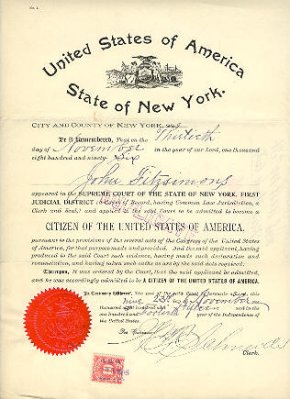
Pinning all your hopes on eBay eyeballs would prove somewhat unproductive, so you need to do a little outreach. This is where Cyndi's List comes in handy. Although the name does not sound all that promising, Cyndi's List has become the premier destination for free online genealogical research. It currently provides nearly 250,000 links. Go to the homepage at http://www.cyndislist.com, pull down to the Surnames, Family Associations & Family Newsletters section, and click on the appropriate letter. When it comes to family associations, there is wide variety. Most are interactive email forums that are free to subscribe to and participate in. Some of these lists are incredibly active, while others are completely moribund. Some embrace variant spellings and others shy away from them. There can be more than one group for a given surname, usually split along lines of primary place of origin or settlement. Family researchers follow the subscription directions, delve into their archives, and often listen in for a few weeks before politely posting a query. If you don't find the name in question in this Surname list, pull down to the very bottom of the page and you will find mailing list links to the vast Genealogy Resources on the Internet site, or you can access these directly through http://www.rootsweb.com. I formerly used the Directory of Family Associations for contact information, but the vast capabilities of the internet have greatly eclipsed such print resources.
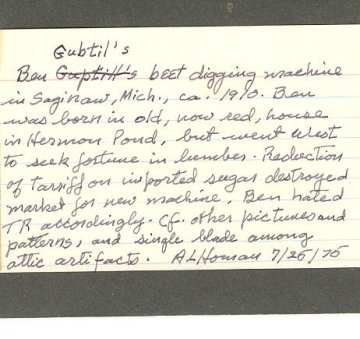
It is taboo to join such a list for the express purpose of marketing your items. One could debate whether this constitutes true spamming until the cows come home, but most groups take exception, so don't go there. The better approach is to contact list administrators directly and ask for their assistance. Once your eBay auction is live, click on "Email to a Friend." Fill in the recipient's email address, tailor your message, and fire away. They see the whole auction, complete with pictures, and can bid right from there. My message usually reads something like, "I came across this early (whatever) some time ago at an auction. I've just listed it on eBay, the online auction service, and thought that the (whatever) family list might be interested in copying the images and information or bidding on it. As list administrator, please consider posting a notice about it. Thank you." The response is usually favorable. Often they will alert their members to this once-in-a-lifetime opportunity, either privately or through the list. More than once, list members have pooled their resources to win the item in question. Even if list administrators keep the notice to themselves in order to avoid competition, at least you have one more interested party on board. On rare occasions, list administrators get crabby when contacted. Such contact is not a violation of list rules, however, and again I don't consider this classic spamming. As my Grandmother used to say, "Who died and left you boss?," and chances are some of that grumpy gatekeeper's list members would pose the same question if they knew what was going on. After all, what better place is there to alert family researchers about extremely unique and potentially important pieces of their past?
The Cyndi's List part of the various Surname pages usually gives direct email addresses. The lower Genealogy Resources on the Internet lists have uniform procedures for subscribing. Just substitute "admin" for the mail or digest mode options provided, as in smith-admin@rootsweb.com, and you have a valid list administrator's email address. As an aside, one can employ the same technique with historical items pertaining to a particular town or city. Email the same eBay notice to the proper town historian or local historical society. These entities are increasingly easy to find on the web.
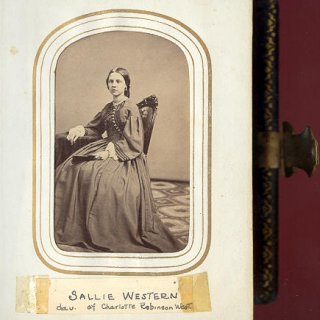
In checking the Cyndi's List surname resources just now in the preparation of this article, I was surprised to see a link dedicated to the very 1729 Van Slyke Bible I recall selling several years ago. This was a massive book with wooden boards covered in leather and adorned with ornamental brass fittings. I paid a pretty penny for this Bible, to the amusement of the auction hall regulars, but it sold for over $1,000.00. Transactions like that make up for all the extra effort and modest returns more often associated with genealogical marketing. The URL is http://olivetreegenealogy.com/nn/surnames/vslyke_Bible.shtml. "The following pictures are from the Van Slyke Bible that was recently auctioned off on e-Bay. The successful bidder phoned me and after a lengthy chat, he drove up from the States to visit me here in Northern Ontario. What a great time we had! Of course he brought the Bible with him and we eagerly went through it page by page. Beautiful engravings (100 or more) fill its pages, and you can easily imagine how impressive it must have been for the Van Slyke family to gather around." Reading on further, the present caretakers have made some reasonable assumptions about the entries in and journey of this Bible, and they have provided lots of extra information from other sources. In conclusion, I'm gratified, the descendants are delighted, and we can assume that the old Van Slykes would be most pleased that this long lost keepsake is now back in the family.
Shawn Purcell is the principle of Balopticon Books & Ephemera in Delmar NY, online at www.balopticon.com, and may be e-mailed at mail@balopticon.com" Copyright 2004 Shawn Purcell
Mike Pengelly
MP: Tom, what's different about BookWriter Professional? Why would a bookseller be interested in this program?
TS: A number of reasons, but if I had to choose one aspect it would be the program's prime directive of "empowering" a bookseller. Having the tools needed to get the job done and making them easily accessible and intuitive to operate makes it much easier for a bookseller to be productive. It also helps them to make good business decisions. They might even have a little fun and discover that computerized bookselling doesn't have to be drudgery.
MP: Are you saying you've found a "magic bullet" solution?
TS: No, but BookWriter does offer an attractive alternative. Every bookseller does things a little differently. Many use multiple programs to get their daily tasks done. That poses a problem for a software developer.
There are two traditional approaches to program design: (1) compel the user to follow specific procedures, or (2) put a variety of capabilities in place, create a generic environment and let them figure it out for themselves (Microsoft Excel is a good example of this).
In my opinion, neither of these approaches has been particularly successful to date. The first approach is too limiting and the second approach requires the user to become conversant with the environment to use it effectively. The learning curve is usually steep. A surprising amount of time can be wasted just trying to make simple things work as expected.
MP: How does BookWriter solve the problem?
TS: Booksellers have specialized needs and I doubt any program will ever completely solve it. There's no question improvements have been made, but humans and computers still only interact well in the movies at this stage of their evolution. But I believe BookWriter makes significant strides towards improving that. It provides a broad scope of possibilities within a structured framework.
BookWriter is constructed rather like a well-organized briefcase. Instead of a big empty space where everything gets dumped randomly, or a partitioned container with sections and lids and separators and covers you must open and close repeatedly to get at things, all of BookWriter's pockets and compartments are visible and accessible at once -- and they interrelate intuitively. It is well-organized from the start, which makes it easier for the user to also be well-organized. Best of all, everyone knows intuitively how to use a well-organized briefcase. It has a short learning curve.
Within each area there are usually a lot of options. There is generally a core functionality at work, but there be many ways in which the bookseller can apply it to their business needs.
MP: Can you give a specific example of how this philosophy applies to BookWriter?
TS: For instance: BookWriter's invoicing capabilities are well defined, but the manner in which information is entered is largely freeform. You are not compelled to follow a strict set of accounting procedures -- though you can certainly do that if you so choose. The program allows you to tell it which accounting fields are required and which are not (none are required by default). You can instantly pull up a group of invoices that are related in some way and generate useful reports through a very powerful reporting system. You can create customized layouts that suit your needs instead of selecting from a list of canned choices that may or may not be suitable for your business. You can produce invoices, quotes, packing slips, etc., all from the same basic information, in real time. You can even service multiple businesses within the same accounting framework, just by selecting a different identity.
These are just some of the functional considerations that went into it. Again, you are not compelled to settle for someone else's idea of what they think you should be doing. Instead, you can organize things to suit what you need to get done. It's not a perfect solution, but it is powerful.
MP: It sounds like versatility and individuality have been elevated over conformity and procedure. Aren't you concerned this will cause problems? Or that people won't understand what to do or how to do it?
TS: No, because no one knows better than the bookseller how their own business is run. The landscape is changing rapidly and versatility is becoming increasingly important across all venues. Adaptation is essential to survival, but booksellers are highly-individualistic and tend to stick with a method once they've settled on it. And, no two sellers do things in quite the same way. Bookselling is no longer a black and white business.
For example, some dealers sell both their own and other dealer's books. Some offer books in their own web site, through multiple listing services, by auction, in their own store, in bulk lots -- in any combination or even all of them simultaneously. Some deal only in collectible books, some in remainders, some sell both new and used, some sell ephemera and antiques and collectibles -- the list goes on and on.
Keeping all this under tight control can be a huge job. Hence, managing it in one comprehensive environment is an essential capability if a seller is to be productive and competitive. That's part of the reason BookWriter has taken so long to produce. The user interface has by far been the biggest effort, going through multiple iterations of simplification. At this point, it should be possible for a novice to use it as easily as a seasoned veteran -- or at least, that's my goal.
MP: Tom, you said on your web site that BookWriter professional has turned into the biggest coding project you've attempted in a long time, and you grossly underestimated the time that would be required to do a good job. Any further comments on that?
TS: It's true. I originally envisioned a finished product and saw a clear way to get from here to there. What I didn't count on was the enormous amount of time required to deal with data quality issues and simplify and polish the user interface. I would say 75% of my time has been spent on that alone.
MP: Do you think people who have known of the project and have been following your progress will realize that the BwPro of then is vastly different to the BwPro that is shortly to be launched?
TS: Some will, others won't. More important to me is the fact that the booksellers who placed advance orders have been extraordinarily supportive and patient. I'm grateful for that. They have been very good to me. Now I hope I can be good to them.
MP: Would you give an outline of the innovations and suggestions that booksellers have requested, over and above what was originally planned, that have been built in and helped to greatly extend the launch date?
TS: New features were really only a part of the problem. A lot of trial-and-error experimentation was involved in getting things right. I can't really give an outline because it wasn't a predictable cause-and-effect scenario, but here's an example:
While coding the Homebase Import utility many data quality issues arose that had to be addressed. For instance, ABE's treatment of keywords is such that they treat each individual word "as" a keyword. Consequently, even articles like "a" "an" and "the" are treated as keywords. That's silly, but that's what they've done. Worse, the keyword terms lose their phraseological integrity when exported from Homebase. Subsequently dumping disassociated words into one long sentence is a poor solution. In addition, Homebase databases are usually full of duplicate records and these have to be pre-purged to avoid problems after the fact.
Presumably these steps were taken by ABE as a result of expediency or the desire to limit use of records outside of their system. Whatever the reason, they create huge problems for the bookseller. One can argue these are all comparatively minor aspects in the broader scheme of things, but they are unquestionably serious obstacles to producing book data that is both coherent and universally compatible in all sales venues. Achieving that compatibility in the least number of steps is very difficult. So, an entirely new means of adapting data and handling the import had to be implemented. Just doing the user interface and testing for this alone took two weeks.
MP: Can you give any insights into the ease and facility of associating images with inventory? I.e. how many images per title are available to show salient details etc.?
TS: Up to 10 images can be directly associated with each Inventory or Wants record. These can be added manually, or they can be selected through a scanning process whereby the program associates images with records by file name, or they can be captured from the web and associated based on ISBN or other retrieval criteria.
MP: From what countries have you had buyers?
TS: So far the US, Canada, England, Ireland, Australia, New Zealand, Germany and Japan.
MP: Will the ISBN Extractor tool validate ISBN's issued in other countries and bring up the relevant data?
TS: ISBN extraction is based on the same Modulo-11 math that all ISBN's are built upon, so as far as I know there are no country-specific issues in this regard. The program is also set up to handle the forthcoming expanded-length ISBN's.
MP: Maybe down the track would it be feasible to bolt on, say, the post (zip) codes of Australia?
TS: Yes. BookWriter is linked to the USPS (United States Postal Service) database, presently. The plan is to eventually put all country codes in place and to electronically link them to any/all facilities provided by each country for instant address validations. The underlying database is built into the program and also contains both latitude/longitude information, allowing you to instantly bring up a map of any location. You can also pre-configure the desired service, such as Yahoo Maps, MapQuest, etc so you can use your favorite.
MP: I've long had the idea that it would be handy to have the facility of having a 'want' listed in the database and, quite some time later, on adding the title to inventory, have the want flagged automatically. Is that possible yet?
TS: It is indeed. There are several ways the program will do this, either manually or automatically. There is a dedicated Matching feature that will find matching Inventory for a new Want, and/or find matching Want(s) for new Inventory. You can also run a comparative analysis against the entire database.
MP: Have you had any experience with voice-recognition software being used to load data into BwPro?
TS: Yes, and it is astonishing how much better the software is now than just a couple of years ago. I believe the error rates are now sufficiently low that this is now a feasible and productive solution. If you had asked me 18 months ago whether or not you should consider using voice recognition software, I would have said No.
MP: Would 64 bit rather 32 bit have any consequences?
TS: Not really, except it will be more efficient. BookWriter has very few operating system dependencies and it uses its own DLL library. The executable is around 4 MB and the entire download is less than 10 MB. I have reduced Microsoft "baggage" to the bare minimum.
MP: I understand there is a non-bookselling aspect to BookWriter. Can you elaborate?
TS: Yes, BookWriter provides multiple database support. It contains field-configuration capabilities and specific applications can be selected on a per-database basis. More will be published about this shortly, as the UIEE specification is also being updated in tandem.
MP: For those who use BwWeb, will there be any changes brought about by the improved/extended scope of BwPro?
TS: Yes indeed. There is a lot of emphasis on managing your own independent web site and BookWriter Web is an intrinsic component in that. I'm still doing integration so that's all I'll say about it for now, but I think people are going to be very pleased with the results -- at least, I hope they will be.
MP: During the two plus years of work and as the comprehensive ability of the program became apparent to those in the industry, were any outside efforts made to head you off at the pass?
TS: Not exactly. Let's say that there were those who were happy to hear of what I was doing, and a very few who were not. Overall, the support has been phenomenal and I'm very encouraged by it all. When you're operating on the edge, that kind of support is a powerful motivator to finish the project. There were times when things looked pretty bleak. Now, I'd have to say we're back on track and gathering steam.
MP: Will booksellers have the opportunity to test-drive the program?
TS: Yes, a free download will be made available as soon as the Beta version is ready to go.
MP: What's your release schedule at this point?
TS: The Beta version is scheduled to go out on/about the end of July. The entire month of August will be devoted to finalizing the Beta, and formal rollout will take place the first week of September.
MP: After all this effort and stress is your wife still talking to you?
TS: Yes, she is my anchor and my life partner. We've been through a lot together and all of this has served to strengthen us, though I admit we'll both be glad to see the project completed. Having additional hands to help out is making a huge difference.
MP: Tom, thanks for taking the time to speak with us. Where can dealers get more information?
TS: You're welcome, thank you for giving me the opportunity.
Mike Pengelly is a bookseller in Australia. Additional information about BookWriter Professional software is available at http://www.bookwritersoftware.com/bwpro/bwpro.htm
Bern Marcowitz and Margot Rosenberg, Booksellers
"Customers will buy our books to read them" was just one of our naive assumptions when we began selling books. We also believed that we could make a lot of money selling books and that there really was a Santa Claus.
We can't say how many customers who buy online from Dog Lovers Bookshop never read the books we sell them. What we do know is that, when we had a bricks-and-mortar store in midtown Manhattan, some of our customers told us that they bought books primarily for decoration, to give their homes that warm "bookish" feeling. To those customers, the appearance and smell of a book were frequently more important than the book's content. An attractive binding or the original dust jacket often made the sale, as did a book's lack of something material: odor.
At the very least these putative nonreaders reinforced our belief in the importance of maintaining our stock in the best possible condition. What's good for books before they're bought and paid for is good for them in their new homes. Most obvious is keeping books free of surface dirt and dust. Routine, gentle dusting with a soft, lint-free cloth is essential for the well-being of books, the environment in which they live, and the people who handle them.
A factor that cannot be overemphasized, though it's too often ignored, is smell. A book may smell unpleasant from exposure to damp, smoke, pungent cooking, and the combination of dust, dirt, age, and deterioration. Fortunately, it's a very rare bad-smelling book that can't be helped.
In our book The Care and Feeding of Books Old and New: A Simple Repair Manual for Book Lovers (Thomas Dunne Books/St. Martin's Press, 2002) we describe our favorite method : the stinky box. The basic method employs a clean, dry carton - we favor liquor boxes from our neighborhood merchants and the plastic or archival storage containers available from Brodart and many office supply dealers. Avoid cartons that have contained food products. The carton should be big enough to let the books undergoing treatment stand upright and open (with proper support). Joining the books, one or more solid room air fresheners; we favor the "outdoorsy" scents. Close the container and give the books and the fresheners time alone together. Check every 24 hours or so at first; let the books breathe for a while outside the box to see if the treatment has worked or if another session is needed. We've waited as long as three weeks for improvement and always found it worthwhile.
If you object to using air freshening products, try good old-fashioned baking soda (but not the box that's been open in the refrigerator!). It does the trick, though it may absorb odors very slowly.
If you use a carton that is clean, dry, and the right size, but it doesn't close tightly (which speeds the process), or if you object to an air freshener's scent escaping from the stinky box, enclose the carton in plastic sheeting or a plastic sack. By all means be sure that your stinky box sits where it cannot get wet or knocked about. Books that smell better don't need creased pages or bumped corners!
Bern and Margot are co-owners of Dog Lovers Bookshop at http:// www.dogbooks.com, and the co-authors of "Care and Feeding of Books Old and New: A Simple Repair Manual for Book Lovers", St. Martin's Press, and they are consultants to the Products Division of The Brodart Company. For more of their book care information go to http:// www.shopbrodart.com, and click on "How-Tos and Guides".
Jean S. McKenna
Q. I've been looking for ways to supplement the low sales recently. Is there any market for book searches and if so, what kind of fees do you charge? What are the mechanics - i.e. collect fee up front or upon producing results, time spans allowed, et al.? Is it worth it? Any feedback will be appreciated. - Cynthia Putt, Parnassus On Wheels
A. There is still a market for search services, though obviously much smaller than it once was. I don't pursue them but still get a fair number of requests, so I provide the service for a fee.
People are funny. They tend to feel gouged by a "free" search service that finds them a $10 book for $25, but readily accept the same total cost as reasonable when they understand what they're paying for--i.e., a service. I explain my charges up front though I don't charge anything unless the book is found. For run-of-the mill OP searches I charge a flat fee ($10 for the first book, $5 each additional) plus a markup of 20% on the book(s). For example, the total cost of finding a $10 book might go like this:
Say the book ($10) plus inbound shipping ($3.50) is $13.50. Mark that total up 20% (dividing by .8) which gives you $16.88. Add the flat search fee of $10 search fee for a total of $26.88. In this example you make $13.38
Used to be that you could confidently have searched books drop-shipped directly from the other bookseller to your customer. I don't do that anymore unless I know the drop-shipper, so in most cases you will add your regular shipping charge to the above. - Rock, Back Creek Books
Q. Am I supposed to collect/pay sales tax on a book order that comes from ABE and gets shipped to a buyer in my state? If so, is there a place on ABE where I can specify the percentage to add to an order if it originates in my state as can be done on eBay? And I always wondered about drop-shipping - if a book dealer in another state orders and pays for a book and asks for it to be drop-shipped in my state, am I supposed to collect state sales tax on that? - Suzanne Carter, Bookseller
A. We email the customer and tell them what the sales tax is, quoting the final cost, and ask them to acknowledge the extra charge. Dealers often have resale tax id numbers and don't pay sales tax. They will tell you when you mention the sales tax. - Fran Morris
A. Not that I am aware of. You have to pay it yourself or perhaps you can add it on in the extra shipping field and explain that it is tax. No (regarding drop-shipping). You are wholesaling it to the other dealer. Any sales tax is the responsibility of the latter - that is the party with whom the retail sale has been transacted. - Darrel Griffin
A. Essentially, one should note in terms what taxes will be charged, and use the "extra shipping charges" option to add the sales tax when processing a taxable order. Email will then be sent to the buyer showing the extra charge and reason and the seller will be notified if everything is going through. - Suzanne Carter
Q. I have a court hearing in which I will certainly be grilled on how I determine my beginning of the year inventory value and my ending of the year inventory value.
I spend anywhere from 30,000 to 45,000 a year on books. Most of these come in large lots. I do not assign a value to each book, per se, but generally apply the purchase price to the better books in the lot in the hopes of recovering my money more quickly. Eventually, the lesser material either gets added to inventory or donated to the local library. My computer program has crashed several time in the past 8 years, and the values it gives are questionable. I tend to deduct whatever I spend on books in a year as the cost of goods for that year. Does anyone else do this? If not, how do you do it? - A bookseller
A. I use the purchase price of the books as COGS (cost of goods sold). I don't have a massive inventory, so I do keep track of the cost for each individual book. When sold, the individual COGS is deducted from the inventory value.
You need a tax-oriented CPA right now. Actually, you needed this a long time ago. $200-300 spent on a CPA's time will either ease your mind or tell you how much trouble you're in. Either way, it's well worth it to know before your hearing: you don't want to be surprised in there. -Michael Watson, 20ants.com
A. We have been using the cost as a percentage of selling price, and if we see that the ratio between cost and inventory is getting out-of-line, we adjust the percentage upward or downward. This was set up by a professional accountant, and while I've been examined by the IRS a few times over the 30 years I've been in business, there was never any question about my method of figuring out inventory valuations.
It's really difficult to keep track of the cost of books that might stay on the shelf for years, were bought individually and in bulk, and, of course, those books we have the choice of eating or donating. - A Bookseller
Q. I need desperate help in trying to combat glare. I've got some books that I MUST take pictures of and do it better than my normal mid range thing - the problem is GLARE.
I can't seem to find a good combination of things to get rid of the glare. I'm using a digital camera and the books have a bit of a sheen anyway, but there has got to be a way to get rid of most of the glare. If anyone has any easy & not expensive (read homemade) ways to do so, please let me know. - Stephanie Howlett-West
A. One solution is to get a polarizing filter for the lens. A good camera store will have one for about $25. You turn the filter until the glare is gone, then snap the picture. Be sure to get one with a circular grid, otherwise the autofocus might not work right. - P. Scott Brown, Bookseller
Q. This is probably a silly question...but why on older books are some of the pages "uncut." I purchased a set of nice Dickens off of PBA. I was hoping to read them, But no! Every other page is uncut and obviously unread. I find this annoying as I can also presume if one carefully cuts the pages, the so called collector value drops faster than the dotcom bust. I would appreciate some insight on this. Forgive me if its been discussed before as must have missed it. - John Porterfield
Editor's Note: In this case 'uncut' is not the correct term. The pages in question are actually 'unopened.' -mw
A. This is not so. unless those PARTICULAR books have a recorded provenance somewhere stating it has uncut pages then no one has ever noticed it but you.
Uncut pages are a manufacturing error, obviously they were meant to be cut open so the pages could be read. They are an erratum such as a misprinted dust jacket, unless you are holding a very rare 1st edition in 1st state, no one really cares. Even if a dealer says they do they don't.
You can fix the error in an non-destructive manner by sliding a serrated knife such as a steak or tomato knife inside the pages and gently cut outward in a sawing motion. Then may read the pages and no one but you will know they had ever been attached. - Joyce Godsey
Q. I recently purchased a stack (over 2 feet tall) of 'The Westerners : New York Posse Brand Book' A number of these were stored, by year, in manila envelopes. Some of these have been subjected to water on one edge, causing not only the pages to adhere to one another, but even multiple issues are stuck together. I think that the text will be basically un-affected, if I can figure out how to separate these without undue damage. The paper is coated, if that makes any difference. How can I go about separating issues and/or pages with the least amount of damage? - G'Jim c):{-
A. Heat: always try heat. Buy a 9 bucks clothes iron with a Teflon surface; start on low, use computer paper to protect the pages from the iron. Get a nylon cake frosting spatula...the thin sharp ones and as you loosen the clay coating with the iron slide the nylon between the pages and wiggle. remember slow and steady. wiggle don't force it. - Joyce Godsey
Q. I have two inquiries about shipping books abroad. Can you send M-bags to Russia? To Italy? What's the minimum weight? I couldn't find the info on the postal service site. Is there another name for them. Do M-bags go air or sea? - Susan Halas, Wailuku, Maui
A. Basic reference is: http://www.usps.com/global/mbags.htm Complete rules: http://pe.usps.gov/text/Imm/immc2_015.html#n1O$w151wats Anywhere is ok for M-bags. No minimum. You pay for 11 pounds min though Go air or sea - surface is much cheaper. Example Books to Italy 11 lbs or less: 9.90 Airmail to Italy : 27.50 - George Cross
Q. What are 'French wrappers' ???? The mind produces many possibilities, none of which have ANYTHING to do with books. - G'Jim c):{-A. French wrappers is a softcover with no dj but dj flaps. The pasted cover extends over the fore-edge the same distance as dj flaps and then they are folded back to resemble them. Think of FRENCH CUFFS on a nice shirt. - Joyce Godsey
Q. Why is it that the word "page" is abbreviated by "pp"? I've never understood that. Or is "pp" something else entirely? - Larry Burdick, Book Oasis
A. "Page" is not abbreviated by "pp", but rather by "p". "pp" is the abbreviation for two or more pages. It's the plural of "p". - Don Lindgren
A. I previously pointed out MS./MSS.; also common is n./nn. for note/notes.
As with p./pp., these abbreviations come from the Latin where there is not a single form of the plural. Latin, of course, used to be the universal scholarly language - and some of us are still hoping for a comeback: http://www.economist.com/diversions/displayStory.cfm?story_id=2281926
The latest edition of The Chicago Manual of Style (15th ed. 2003) indicates that p./pp. are still the standard abbreviations (sect. 17.132). Continuing to use them is also a nod to scholarly universalism. - William M. Klimon
Q. Anyone have any luck with mold and mildew? The live stuff, not the dead stuff. Once it's dead it's just a stain and a smell. - Joyce Godsey
A. What seems to work for me in the capitol of Mildewlandia is an application of the purest rubbing alcohol you can buy at the pharmacy (95% or above). Apply liberally with a soft cloth, put clean plastic bags between pages before application. Leave the bags in the book & put a weight on it, leave until dry. The high test alcohol kills 'em dead & with very little water in it doesn't seem to damage the paper - and dries fast. I would exercise extreme caution with any paper the first time, especially fancy papers that have a bigger chance of waving. Try a teeny bit on an obscure corner. - Lynn
Q. Another question for which I once knew the answer: what is the correct way to catalogue a "junior"?
Specifically Marshall Bond, Jr. - I checked a data base and found: Bond, Marshall, Jr. Bond, Jr., Marshall Bond, Marshall (Jr.) Bond Jr., Marshall Bond, Marshall (not so cleverly avoiding the problem) ...and numerous other variations.
What is right and what is your authority for thinking so? - Lynn
A. Chicago Manual of Style, Chapter 18. Subhead 37 (18.37), INDEXES: Persons with same names. Bond, Marshall, Jr. - Joyce Godsey
Q. As a rank amateur am wondering what basis for pricing is used if there are NO copies of a certain volume on any search site , and I have too little experience to hazard what could be a costly guess ?? I suppose I could let eBay set the price , but am trying to do better on my own . Thanks for any input . - Jim Menzel, Second Thoughts Used Books
A. The following answers the above question and elucidates further: As to the poster's question on NO listings, the first thing would be to double check your typing and spelling. Then maybe search on title but not author; finally try author but not title, to see what the author's other books are listed at.
Bookfinder.com, on the other hand, seems a bit more useful for the layman, especially if they are not clear on author/title/spelling, etc. It saves you having to scroll through hundreds of responses. But I normally use AddAll.com.
AddAll allows you to pre-set for hb/pb/all bindings. A problem, however, is that their software defaults to whatever your last search specified. So if you search for hardbacks only, your next search will be preset for hardbacks; you have to remember to change the setting on the next search if you want paperbacks or all bindings. An alternative is to group your searches into batches of hb and pb.
I am not up on eBay or Amazon searches. They are a definite part of the market. eBay will search completed auctions.
Using AddAll.com, you get all the listed copies (or at least lots of them) in one list, regardless of catalogers' variant title entries. AddAll can be set to sort in descending order by price, thus leaving the dreck (and the sleepers) toward the end of the list. If you wish, you can limit the search to hardbacks, etc. (You can also exclude the Alibris listings, which are mostly duplications. Unfortunately, I know of no reliable way to automatically eliminate ex-library, book club, or jacketless books.) At the bottom of the results page, there are options that can eliminate or limit the findings to certain publishers or other words.
Any sample has limited reliability. (Listed books are a sample of the whole world.) If a book is really scarce, you won't see enough to use. If it's really common, you may be wasting your time. In the mid range, the AddAll findings can be quite instructive.
The top of the AddAll report will indicate the total number of books found. The first screen will display only the top 50. Let's say it finds 40. You can find the median price at No. 20, (or just move the scrollbar up to about halfway; with a little practice you can hit No. 20 most of the time.) Then look for No.10 and No. 30, which define the midrange (remember quartiles from Stat class?).
None of this eliminates the need for judgment, but it surely gives a good picture of the competition. You also need to pay attention to condition descriptions, and of course edition. And needless to say, the existing listings can be quite useful in descriptions of points, various editions or bindings, etc. - Don Ramsey, http://www.AllBooksConsidered.com
A. research. research. research. research. research. research. research. research.
Try American Book Prices Current, auction records, BAL (Bibliography of American Literature) , dealer catalogues, ask around.... - Joyce Godsey
A. All good sources and most should be available in the public library. I'd add bibliographies of all kinds. A lot of additional research can be done on line beyond a check of the data bases.
Sometimes I just Google the author & title. You may find someone like myself who puts items on their own web page before putting them on a data base. (My good stock is usually sold long before any data base ever sees it.) You may find that something you never heard of is actually well known or sought after. You might even find a group of people who are fanatics. Or you may find out that you seem to be the only person who has ever hears of the item. Even negative information helps.
I also always check WorldCat.
Editor's Note: "WorldCat is a worldwide union catalog created and maintained collectively by more than 9,000 member institutions. With millions of online records built from the bibliographic and ownership information of contributing libraries, it is the largest and most comprehensive database of its kind.
WorldCat is the foundation of many OCLC services that let your library process, manage and share information resources and let your users search for and obtain them." - Lynn
A. If you sell all or most of your books via the internet, you can't IGNORE the prices there totally - after all, those books are your direct competition - but sometimes if one looks at the pricing trend objectively, booksellers look like a bunch of sheep - If the first bookseller to list a book goes high, then all of the other booksellers will more or less follow that price.
If the first bookseller goes low, ditto - NEVER MIND THE FACT THAT THIS LOW-PRICED BOOK MIGHT BE HARDER TO FIND AND BETTER than the higher priced one! So.....
#1. It never hurts to leave a little on the table (in other words, to price a book so another dealer can make a profit or so a collector will be happy with a bargain) as long as you have made a decent profit. This is what keeps people coming back. I didn't make this up: it's something I learned from another bookseller, back when I first started selling books. Don't be scared about not getting top dollar - that is a moving target and you can't keep up with it anyhow.
#2. Use some common sense when researching on the Internet - and broaden your search if necessary.
We recently bought a signed F/F 1st of a nice poetry anthology. I look up the book and all copies on line are exlibs $25 and under. I look up the editor who signed it, and more recent and more common anthologies by this same editor are up to $150 (unsigned). I looked at "signed" books by the author/editor and they are not terrible uncommon, with most in the $25-50 range. So $25 for an exlib is too high, $150 (followed by the next sheep who went for $145, etc.) is ridiculous. A reasonable price is probably $30-40 for our signed copy - and that gives us a good profit, etc..... With luck this book will sell reasonably quickly, since our copy is the only "good" one, and I will write a better description than any of the others.....
I never rely on a price when there are only a few copies listed (unless the price really matches my "gut feeling" when I bought it) - I try and look at other books by the same author, or the same publisher, or on the same topic - or whatever it takes.
#3 - if a book is REALLY worth a lot of money there MUST be a good reason for that. "No other copies on line" is not a good reason. Neither is "only one copy listed and it is an exlib for $250."
Don't let greed define your pricing. Let your KNOWLEDGE of books determine how you price a book - that is why bookselling has traditionally been considered a profession!
If you have a book that is a first hand account of exploring xxxx and it seems to be earlier than anything else on the same topic, and you find it absolutely fascinating and there are no other copies on line - then go for the moon in pricing it - and say WHY this is such an incredible book in your description. Read it (or parts of it), research it, research the topic - (even if you never buy a book from them, read Forrest's and Susan's descriptions of the books they o ffer for sale)
#4. Assume a knowledgeable buyer - don't try to get every last penny out of an unwary buyer who wants a copy and thinks just because you priced it at $250 it is really worth that!
At the end of the day - or at the end of your career - you want to feel good about yourself, and you are going to feel a lot better if you sold a few bargains and made people happy, than if you overpriced common dreck just because "you can get a lot of money for these books on Amazon"
We all know that most "booksellers" - that is, those who are selling books because they find them fascinating (as opposed to those who are selling them because they are a commodity easy to find cheap/easy to pack and ship, etc.) - are not motivated solely by money (if we were we'd be doing something else and making more money) - so when you look up a book on the internet, don't be doing it just for the price - do it as part of researching the book. If the book is a common one, that you are pretty familiar with, there is no need to research it (or look up the price), just stick a reasonable price on it, and be done with it.... - Christine Volk
A. Internet prices can still be quite useful if you are willing to accept them for what they are, and not for what they are not.
Using AddAll.com, you get all the listed copies (or at least lots of them) in one list, regardless of catalogers' variant title entries. AddAll can be set to sort in descending order by price, thus leaving the dreck (and the sleepers) toward the end of the list. If you wish, you can limit the search to hardbacks, etc. (You can also exclude the Alibris listings, which are mostly duplications. Unfortunately, I know of no reliable way to automatically eliminate ex-library, book club, or jacketless books.) At the bottom of the results page, there are options that can eliminate or limit the findings to certain publishers or other words.
Any sample has limited reliability. (Listed books are a sample of the whole world.) If a book is really scarce, you won't see enough to use. If it's really common, you may be wasting your time. In the mid range, the AddAll findings can be quite instructive.
The top of the AddAll report will indicate the total number of books found. The first screen will display only the top 50. Let's say it finds 40. You can find the median price at No. 20, (or just move the scrollbar up to about halfway; with a little practice you can hit No. 20 most of the time.) Then look for No.10 and No. 30, which define the midrange (remember quartiles from Stat class?).
None of this eliminates the need for judgment, but it surely gives a good picture of the competition. You also need to pay attention to condition descriptions, and of course edition.
And needless to say, the existing listings can be quite useful in descriptions of points, various editions or bindings, etc.
As to the poster's question on NO listings, the first thing would be to double check your typing and spelling. Then maybe search on title but not author; finally try author but not title, to see what the author's other books are listed at.
Bookfinder.com, on the other hand, seems a bit more useful for the layman, especially if they are not clear on author/title/spelling, etc. It saves you having to scroll through hundreds of responses. But I normally use AddAll.com.
AddAll allows you to pre-set for hb/pb/all bindings. A problem, however, is that their software defaults to whatever your last search specified. So if you search for hardbacks only, your next search will be preset for hardbacks; you have to remember to change the setting on the next search if you want paperbacks or all bindings. An alternative is to group your searches into batches of hb and pb.
I am not up on eBay or Amazon searches. They are a definite part of the market. eBay will search completed auctions. - Don Ramsey, All Books Considered
A. We recently had a very similar experience. We picked up a recently published (within 25 years) ex-library book on Spanish (gilt) leather, primarily because of the unusual topic.
Initially we saw a copy listed on the net for hundreds. I just couldn't think that the book was that valuable. I used Google and found out the book is the bible for craftsfolk in that area of work. I priced it at less than a 1/3 of the high price found on the net, even then I made sure I cleaned it up a lot before I listed it. It sold within a month to a gilt worker in Europe.
We also regularly check our more expensive items that are over a year old to see if more copies have appeared on the net. In some cases we have had $100.00 books drop to $40.00 but they usually sell in a timely manner after I adjust the price. Good description can be a great help, as Chris Volk mentioned. Definitely true in the cases I mentioned here. - Gene Alloway, Motte & Bailey Booksellers, www.mottebooks.com
Q&A is compiled by Jean S. McKenna, Education Chairwoman for the Independent Online Booksellers Association (IOBA). Questions and comments may be sent to Jean at education@ioba.org. As usual, thanks to all of our contributors, especially Lynn and his Bibliophile mailing list at http://bibliophilegroup.com/mailman/listinfo/biblio_bibliophilegroup.com
Shirley Bryant
Q: Peter, how did you get involved in creating book Web sites?
A: I owned a new and used bookstore for 23 years and I began selling on eBay and Bibliofind in 1997. Internet bookselling was changing rapidly and new opportunities seemed to be knocking everywhere. I was particularly fascinated by eBay and I wanted to build a "children's books only" auction. I closed my store in 2000 and began a crash course in web development and I have been learning ever since.
Q: Many children's books are very collectible. Do Collector's Book Market and Children's Book Market overlap?
A: It's inevitable that they overlap a little bit, but they are aimed at different buying audiences. One has a book Auction and a Fine Book Mart for collectors who want to browse investment quality books and the other has a low-fee children's book auction for educators and parents who want to promote reading.
Q: I see the Fine Book Mart has a $25 minimum selling price. In what other way is Collector's Book Market different from the other used book sites?
A: The Fine Book Mart is structured unlike any other site. This is a hard thing to get across because the meta-search sites like Bookfinder and AddAll create the expectation that fixed-price sites will all work in the same way. There are many fine "classic" format online databases already available to booksellers, so I wanted to design something different.

The Fine Book Mart is a gallery where you can advertise or "showcase" your best items for a modest 90-day listing fee and no commission. We can't compete with the big sites if you want to search their huge databases for a specific title, but we hope to build a site where they can't compete with us if you want to just browse for something quality to buy. We are not an alternative to the other sites; we are complimentary to them.
Our databases (fixed-price and auction) are visually oriented and built for browsing. Each listing is allowed up to 6 free image uploads, all search and browse lists include a free extra-large thumbnail image (and free 1st printing and/or signed item icons where appropriate), and sellers can enhance their item descriptions with our WYSIWYG HTML editor (no HTML knowledge required).
Our most important browsing feature is our "nested" book category system that allows buyers to browse by broad "top-level" categories or narrower subcategories, but we also have additional browsing options that allow buyers to view 'all' items with (or without) any combination of characteristics.
For example, you can browse either or both databases for "All signed items", or "All first printings", or "All signed first printings", or "ALL signed, first printing, non-ex-lib, non-book club, non-remainder, hardback, new listings in NF or better condition with a VG or better dust jacket, that was published between 1940 and 1945, and priced from $100 to $1000, and . . . (there are more options but you get the idea). By adding an author, title, or publisher to the text search box, you can use these same options to perform an "Advanced Search".
Q: You didn't mention auction pricing. Is there a minimum price on auctions, also?
A: No, there are no minimum prices on the auctions. Low starting bids often create bidding activity that in turn attracts more bids. We even have two special "Bargain Bin" categories for our special "dollar" auctions that have $1 starting bids with no reserve.
Q: How do the book auctions work?A: They are similar to eBay; we have "proxy" bidding and fixed ending times, but there are also special "book" features built in that facilitate the advanced search and browse functions mentioned above. If you use eBay, you can use our auctions. Our goal is to keep everything simple and easy to use. And much less expensive.
There will be one low 25-cent insertion fee regardless of your starting bid or reserve price. We offer free image uploads that automatically create a free gallery thumbnail. You can list your auction for up to 15 days and set the exact ending time with no extra charge.In addition to the standard and "dollar" auction formats, we also have "fixed-price" and "linked" auctions. The fixed-price auctions give sellers a place to sell their books priced under $25 and the linked auctions give them an easy way to "advertise" their auctions running on eBay and other sites.
Q: Does the children's book site work the same way as the collector's book site?
A: The auction is very similar (except for a special "reading level" field and a few other differences), but instead of a Fine Book Mart, the children's site has a special Literacy/Donor Mart where teachers (and others) can post free requests for donor help. These requests can be for anything from Gift Certificates to hand out as achievement awards to providing books or funding for school libraries. Donors can also post free ads to give away books they want to donate.
Q: Tell me more about this donations program for children's books.
A: The Literacy/Donor Mart concept is new, and the details are not tested, but it could be an opportunity to recycle a lot of great children's books that would otherwise end up collecting dust. It's basically a classified ad system for requests and donation offers. The ChildrensBookMarket.com Gift Certificates are a central part. The plan is to donate back 50% of all (future) auction fees as Gift Certificates, which will be awarded to the most compelling requests posted to the Literacy/Donor Mart. The recipients in turn will use the Gift Certificates to bid on the auctions, creating a built-in demand for the sellers (sellers will be reimbursed 100% for the Gift Certificates they accept as payment). We already have 12,000 books listed on the children's book auction, so we are ready to start and we will soon be giving away $1,000 worth of gift certificates to begin our promotion of the children's book site.
Q: You said "future" fees. What are the current fees and what changes in the fees can sellers expect in the future?
A: Right now there are no fees; we are still putting the finishing touches on both of the sites. We should be finished by the time this interview is published and that will mark the beginning of our promotion. Fees won't begin until we have reached a "critical mass" of activity for each site. I'm not sure what that is, exactly, but we want the sellers to be able to expect a decent number of "hits" on their items. We are being crawled by the search engines and you can see by the hit counters on each listing that we are already getting some good traffic. Unlike the larger sites, our individual listings show up in many search engine results. Google the exact title of any ad or an auction; you can see we usually get the #1 ranking.
As for future fees, our plan is to keep them low by keeping the overhead as simple as possible. All transactions are direct between the buyer and seller, we don't process credit cards for transactions, and we will only get involved if there is a dispute or a problem. We hope to stay with a "no commission/listing fee only" format if we can make it profitable. The seller simply pays to "advertise" their item and we don't have to worry about "off-site" sales.
Q: What else do you want to mention about your sites?
A: There are several other integrated features we have built into these sites, a link directory mall (list your website), a book news and headlines module (members submit stories and announcements), auction and ad "alerts" (get notified when a item is listed), seller and donor profiles, book wanted ads, and more, but these are new and should evolve, so I shouldn't try to go into detail about those now. Instead, because most of your readers are online booksellers, I would like to mention a few of the solutions we have developed to address the common complaints everyone has been reading about on the major bookseller lists for the past few years. These problems get ignored when sites are only interested in getting as many listing fees as possible.
"Too many misdescribed books." Like other quality sites, sellers must agree to a Code of Ethics and a "guaranteed-to-be-as-described" policy, but we take it a step further to create more buyer confidence. Each listing has a "Report Item" button that is part of a member-enforced quality control system. If an item is inaccurately graded, incorrectly described (called a 1st printing when it's not, not called an ex-library when it is, etc.), obviously miscategorized, or there is any other problem with a listing, any member can use the (anonymous) Report Item button to notify the administrator. If the complaint is judged to be valid, a polite "reported item" notice is sent to the seller with the appropriate options and time frame in which to correct the problem or dispute it.
"Too many penny-sellers are listing common or unwanted titles, clogging the search results." The "per-item" listing fees should slow this problem down dramatically, but it also takes a little more time to list an auction or a Fine Book Mart ad, so sellers will hopefully restrict their listings to those books that have genuine value and a good chance of selling.
"Third-party sellers are cross-listing from other sites." No third-party, Print-on-Demand, or e-book listings are allowed. Sellers must have physical possession of every item they list.
"No enforcement of policies and rules." We have strict enforcement. Sellers who are repeatedly reported, willfully evade following the rules, or sell improper items will be removed. Winning bidders or buyers who fail to pay for an item without a legitimate reason will also be removed (one strike and you're out on that one).
"Ever increasing fees and ever more restrictive policies." I discussed our fee strategy above, a nd because we don't have to worry about "off-site" sales, we don't want to restrict contact between the buyers and the sellers; we want to encourage it. If the sellers are happy, they will come back.
Q: What about Niche Market Solutions? Do you have other projects in the works?
A: I formed Niche Market Solutions a few years ago with my business partner, Bill Paulsen, who is an IT wizard with over ten years of programming and server administration experience (our servers are lightning fast). As the dominant e-commerce sites continue to expand at a rapid pace and bury any direct competition, we see opportunity in smaller niche sites. The quest for more and more listing fees and higher quarterly profit reports is creating the problems complained about above.
We have built a variety of e-commerce solutions to give specialists the tools to establish their own niche market websites. Our next project is OklahomaBookMarket.com, one of 50 online state and regional book marketplaces we plan to build and host. We have all 49 other "StateBookMarket" domain names and we will be offering them as custom turnkey consumer-to-consumer e-commerce sites in the near future. Each of the state sites will be owned and operated independently, but they will all link together and have a similar format (owners will have control over all decisions: fees, categories, logos, colors, etc.). Booksellers who specialize in regional material can contact us now if they want information about their state's BookMarket site.
Bill has also just finished a remarkable "shopping cart" system and we will soon be offering custom turnkey, hosted websites for booksellers. These websites will automatically be included in our Link Directory Malls that we will be promoting as a major part of our websites, so we can offer the additional advantage of built-in traffic.
Q: You seem to have your hands full. Do you have a staff and a budget to promote the sites?
A: Not yet. We built these sites with the idea that someone would want to purchase them or partner with us. We don't want to run the day-to-day operations; we want to build and host other websites. We have been refining these sites for a long time now and we are finally ready to hand them over to someone else, whether that is an individual, an organization, another website, or a silent partner. Once we get some funding, we think these sites will take off in a hurry.
Q: Good luck, and thank you for talking with us.
A: Thank you. I appreciate the opportunity to be included in The Standard; it is a great resource for booksellers.
Peter Thomas is the founder of Niche Market Solutions, LLC, a Web site development company that has created two used book websites, http://www.CollectorsBookMarket.com and http://www.ChildrensBookMarket.com, as well as other non-book e-commerce sites. He can be reached at admin@collectorsbookmarket.com .
Shirley Bryant is the proprietor of Authors & Artists at http://www.aaabooks.com